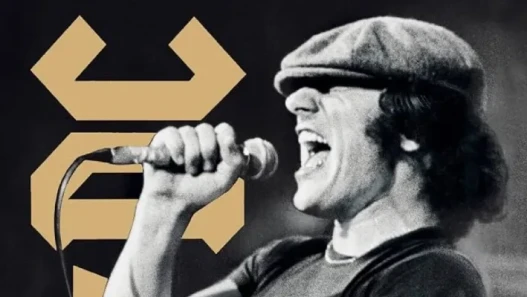
An intimate and wildly entertaining portrait of rock legend Brian Johnson, THE LIVES OF BRIAN charts his journey from working-class Newcastle to fronting AC/DC and recording the best-selling rock album of all time, told with his trademark wit, raw honesty, and a touch of Monty Python flair.
The life of Harvey Kurtzman and his creation of MAD Magazine is one of the great untold stories in American and global cultural history. THE MAD WORLD OF HARVEY KURTZMAN is a deep dive into the world of comic books, pop culture and satire.
Founded in 2004 by Damon Albarn and Ian Birrell, the UK music collective Africa Express has spent two decades bringing artists together across borders. In February 2024 it arrived in the Americas for the first time. Over eight days in Las Estacas, Mexico, more than 60 musicians from Africa, Latin America, Europe and the United States came together to rehearse, perform and create an album from scratch.
Following Africa Express from Mexico through Europe and back, the film becomes a poetic journey through music, memory and imagination, celebrating the power of collaboration and community as reality slowly blurs with fantasy.
With no single protagonist, the collective itself is the main character and music is its language. Africa Express is a portrait of a fleeting community and of what strangers from different worlds can build when they truly listen to each other.
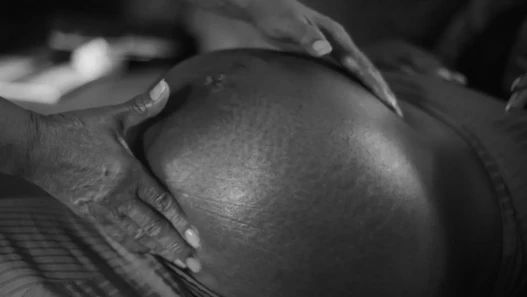
Carrying forward an ancestral practice, Mama Sarahn and Sekesa, two formidable Black midwives, provide safe home births for families in Atlanta, Georgia. Forced to work underground in a state where home-birth midwives cannot be licensed, they lead a campaign to change the law. Through intimate birth scenes, captured in timeless black and white, the film follows their fight for recognition against the backdrop of a maternal health crisis that disproportionately impacts Black women.
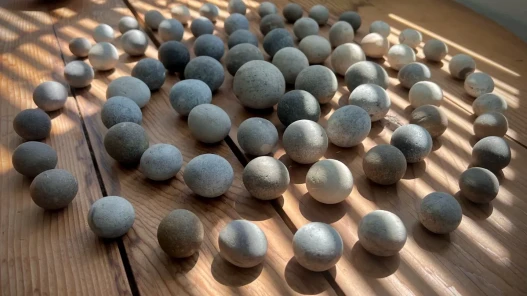
Henry Moore beside a pebble. Barbara Hepworth next to broken china. No labels. No velvet ropes. No explanation. Art stripped of its usual deference and curatorial esperanto. Art revealing its true power. Art for all.
‘You want to look at how it is and marvel at the ordinariness of it and the extraordinariness of it all’ (Lubaina Himid)
Kettle’s Yard is a small, humble home. Created by a couple, Jim & Helen Ede, who, with little money, became supporters and friends of many of the most important artists of the 20th Century. Jim survived the trenches of the First World War but despaired of a society that could allow such horrors. His is a quiet, very British, revolution that has a powerful resonance today.
‘These fragments that you find all around Kettle’s Yard, they’re almost an equivalent to the fragments of a bomb blast that he’s trying to capture and hold, he’s trying to stop this explosive force of horror and warfare and people fighting’ (Andrew Nairne)
Antony Gormley, Edmund de Waal, Cornelia Parker, Ai Weiwei and others, passionately explain why this humble place is so important to them and why Jim’s radical ideas are vital for us today.
Hello You is an autopsy of your reflection. This mirror has two sides: one that observes, and another that follows. Exploring stories of altered perception, from phantom limbs to the feeling of being a stranger in your own body, the experience stretches the split-second act of self-recognition into something you can watch unfold. Here you are asked not to look at yourself, but at the lenses through which you look.
HOME is a raw, character driven, feature documentary exploring safety, belonging and human dignity through one extraordinary story.
At the end of the last century, ALEN fled the Bosnian War as ethnic nationalism tore apart his home. Finding sanctuary in Britain as an eighteen-year-old refugee, he rebuilt his life in London, starting a family and training as a Health and Safety professional.
Then came the UK’s deadliest residential disaster since WW2. The Grenfell fire, in June 2017, led to seventy-two deaths and exposed a nation-wide housing-safety crisis. Alen, his family and thousands more realised they were living in unsafe homes. Refused help from the government, Alen took a stand, but soon found himself evicted, living on the street and fighting the very system that had once protected him but was now quietly erasing him.
Through Alen’s decade-long journey to get back home, the film bears witness to the human cost of political negligence, corporate greed and systemic failure. Embodied in Alen’s life, reflected by Grenfell and echoed across the geo-political landscape, HOME asks what it means for our world when the very values that define our humanity conflict with the systems and structures we have allegedly built to preserve them.
How Stanley Kubrick’s 2001 A SPACE ODYSSEY revolutionized science fiction cinema through groundbreaking visual effects, innovative storytelling, and profound themes about human evolution and technology.
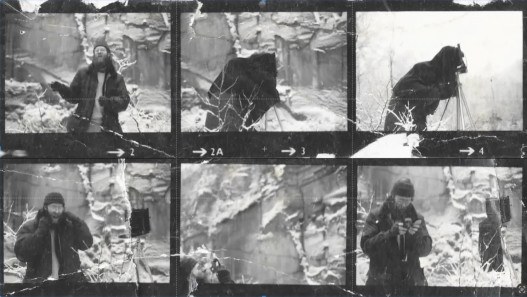
Edge is Everything is a love letter to photography and to the art of truly seeing. For over 30 years, Thomas Joshua Cooper has photographed the furthest edges of land with a 19th century camera. His work bears witness to landscapes transformed by climate change while recovering forgotten histories of migration, exploration and departure.
Cooper draws on his Native American heritage and an extraordinary archive of audio interviews he recorded in the 1970s with photography’s most influential figures, including Ansel Adams, Man Ray, Imogen Cunningham and Paul Strand. These previously unheard tapes create a rare intergenerational conversation about photography and artistic practice.
The film also examines the cost of an uncompromising creative life. His wife and adult daughter reveal the impact of his prolonged absences and challenge the mythology of the solitary artist.
At a time defined by speed, distraction and instant images, Edge is Everything asks what might happen if we slowed down long enough to fully observe. This question has guided Cooper since childhood, when he was taught by his Native American elders: “Each of us has an eye that sees and a seeing eye. When you learn which is which, you will have begun to become human.”
Lost Souls, Swimming in a Fish Bowl is a silent documentary about the invisible territories of depression, isolation, memory, and the fragile act of continuing to live.
There are people who move through the world every day while feeling as though they exist behind glass. They work, walk, eat, sleep, smile, and disappear into crowds—yet remain suspended within an interior world that no one else can enter. The film observes these fractured states without explanation, diagnosis, or spoken testimony.
Instead, silence becomes the language of the film.
Through faces, bodies, empty rooms, urban landscapes, found footage, archival fragments, photographs, gestures, objects, and moments of stillness, Lost Souls, Swimming in a Fish Bowl enters the psychological geography of people who feel trapped inside themselves. The fish bowl becomes both metaphor and physical space: transparent enough to see the world outside, yet impossible to escape.
Adlais (Echo) weaves Welsh language folklore and histories through their shared subjects of poetry and drowning – and asks whether we’re listening to the past as it surfaces today.