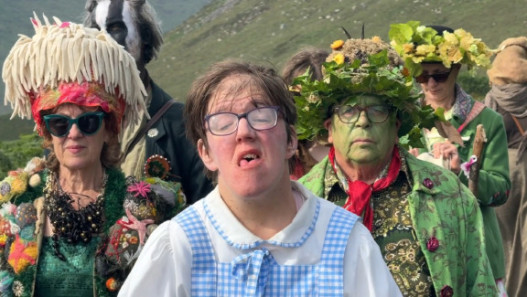
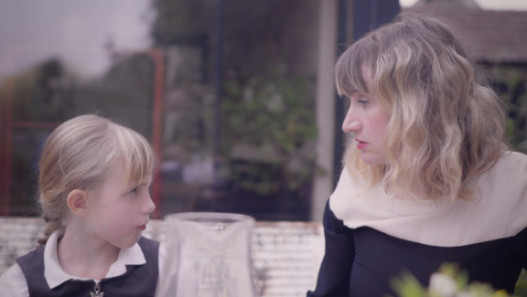
A film that hovers above the make-believe world of hope. Eden Kotting, dressed as Dorothy from The Wizard of Oz takes us on a journey from The Factory to The Silent Valley. Accompanied by a gaggle of folkloricists and workers in white coats the journey ends in The Toilet of Hope.
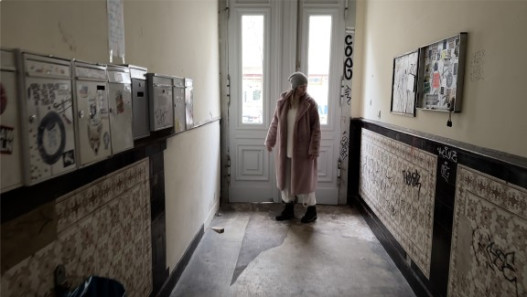
How can you be accepted when you're hiding behind a mask? The film represents a journey of a woman overcoming fear of not being accepted: starting from her desire to correspond to societal female standards, through admitting that she always felt as a weirdo and looking for an outside validation, to understanding that she does not need people who do not love her as she is and finally to accepting that she is ‘not normal’ and that the only acceptance she needs is the self-acceptance.
Freedom is our greatest need and our greatest fear. A story of one day from a life of a woman, everyday fighting with herself, trying to find freedom to feel, to enjoy, to make mistakes, to be a human being. A life happens not in epic events, but in everyday small steps.
When we are 100% authentically ourselves, we are being told we are Too Much. This is a story of everyday fighting with yourself and for yourself, of trying to find freedom to feel, to enjoy, to make mistakes, to be a woman.
From 20s to their 40s and more, women are put in cliche boxes suggesting what they should be at this age, at this life stage, in a certain country and culture. But we need to find a way to our true selves.
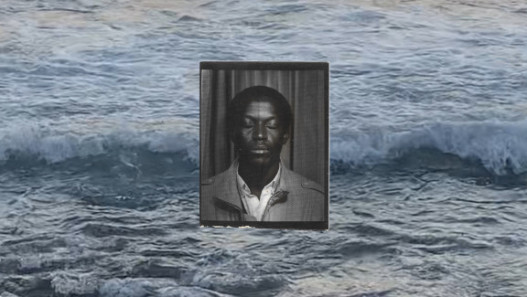
A non-linear iterated body of work investigating the sonic, visual and haptic frequencies of images, ancestral memory, transmission, oral tradition, and metaphors of radio technologies as sites of possibility for the African diaspora.
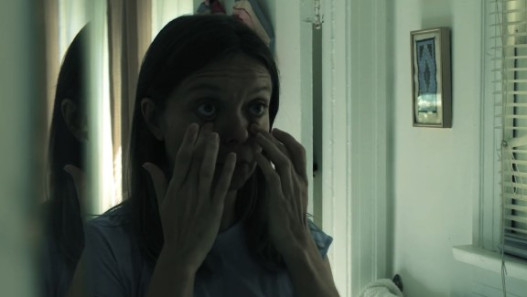
A grieving mother feels like she’s losing her mind when she senses her deceased daughter’s ethereal, poltergeist-like energy around her. At first she’s terrified it will punish her, since she’s haunted by her own inadequacy as a mother. But later, she senses her daughter’s affection and intuitively knows, it’s never too late to offer all of your love.
Jeff, an insomniac, discovers a mystical jellyfish creature one night in the alley by his house. Jeff, who’s haunted by the loss of his wife, reluctantly helps the strange being as it tries to escape the two hostile police on its trail.
With themes of loss, memory and duty, the monochromatic film mixes experimental elements with nods to silent film, film noir and 1950s b-movies. Its dreamy feel is heightened by the frequent appearance of musicians who provide a live musical commentary to the action.
Aryan Pandey, a Nepalese Migrant Worker living in Peckham South London, experiences an existential crisis as he tries to make his way in the world of work. Aryan finds it hard to cope with the stresses of everyday life.
Absurd visions of a disturbing nature plagues Aryan’s mind and place fear in his heart. Aryan’s inability to confide his fears to girlfriend Sarah places a strain on their relationship.
Aryan’s inner voice encourages him to exercise the power of concentration to build the mental strength and resilience to free his mind from mental decay.
Through deep meditation and exercise, Aryan gains the willpower, strength and self-belief to face his demons in the heat of the night. Aryan’s voyage of self-discovery illustrates the power of the human will to overcome adversity during times of crisis.
WITH THESE HANDS shares challenging, complex and under-discussed stories of sexual assault and recovery. It explores the role of listening in the recovery of both survivors and those responsible for sexual harm. WTH is made in collaboration with contributing artists and in consultation with survivor-run organisation SLEEC.
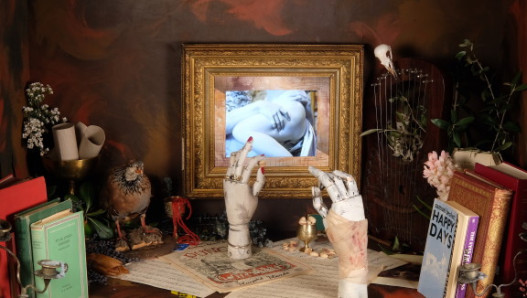
Two hands, Glynid and Hynus, are trapped together indoors. As they talk, we learn that they are waiting for a virus wreaking havoc in the outer world. Glynid is an anxiety-riddled know–it–all who dogmatically follows ‘the science,’ while Hynus is an ignoramus whose nonsensical belligerence highlights their absurd situation. They argue over what precautions to take, what the statistics mean, and how to pass the time. Endless desperate moves ensue as the pair attend a virtual Shibari workshop, create pubic hair art, compose a virus-themed anthem, and partake in cleansings and poisonings, before remembering they have a child that they may have accidentally left outside. Deciding to leave to find the child, they stay.
This puppet show, drawing from Beckett’s Waiting for Godot, satirizes the Covid-19 era. Connected to the outside by a window that doubles as a screen, what begins as a waiting game soon unravels into paranoiac exchanges, conspiratorial musings, and bouts of reflection that lead to self–loathing in one hand and self–care in the other. As the objects that once held meaning to them disappear while they wait, a new reality grows around them, if only they had eyes to see it.