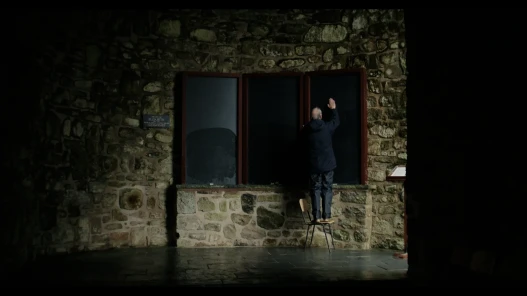
How do we remember the past when our history has been faked?
One man’s idea to rebuild a capital on the foundations of an unfinished city erased a collective memory, casting a dark shadow over Skopje's future identity.
Fresh out of university and brimming with optimism, Lucy and Sean begin their civil service placements at Belfast City Council, only to find themselves thrust into chaos when a bizarre gastrointestinal epidemic - dubbed "Code Brown" - strikes the city. As nappies become black-market currency and the council descends into disarray, the duo stumbles upon a conspiracy involving illegal sewage dumping and a corrupt councillor lining his pockets. What began as mundane office work spirals into a frantic investigation filled with stool samples, shady contracts, and a very suspicious boat.
With Belfast quite literally in the shit, it’s not the bureaucrats who save the day, but its citizens. From disinfectant-wielding grannies to paramedics in DIY hazmat suits, the community rallies with resilience and absurdity.
In a climactic council showdown - punctuated by an explosive display from local wildlife... - Lucy and Sean expose the scandal, becoming unlikely heroes. The film ends with a messy but heartwarming celebration of civic pride, teamwork, and a city that proves it can weather any storm…even a tidal wave of diarrhea.
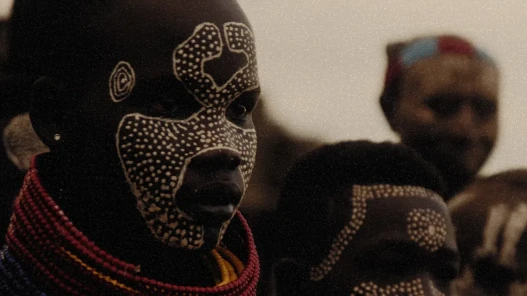
Set across Kenya, a cinematic documentary that immerses the viewer in a world where ancestry and progress coexist in tension.
In the rural heartlands, a tribal community embodies heritage through agriculture ritual and craft.
In Mombasa, a young professional works at the intersection of technology and evolving infrastructure, facing constant change.
A school student balances home and classroom life while imagining a future shaped by tradition and opportunity.
Filmed in a 'fly-on-the-wall' style, without narration or talking heads, the film unfolds through observation: the pounding of grain, the rush of traffic, the laughter of children, the silence of ceremony. By weaving these strands together, TIPPING POINT asks a quietly profound question: At this cultural and economic crossroads, what does well-being mean, and is happiness being redefined?
Nearing the end of a failed exploratory mining mission in Antarctica, geologist Sammie Bailey drills into an ice cave and discovers a valuable new mineral. The young crew are ecstatic to be going home in two days and with their full bonuses, at the behest of off-base commander Harrison Schultz. Even the cook Leo, who’s not on a share, is pleased to be leaving after months on the isolated base.
When Sammie wakes the day after the party, however, she’s facing more than just a hangover. The latest drill has woken a malevolent Creature, which begins attacking the crew. As they fall one by one, Sammie leads the charge to get the communications back on line. With the rescuers finally on their way, Sammie and Leo realise that science officer Mia has been conspiring with Harrison to use the mineral for military purposes. As a white out descends, Sammie gets the mineral back from Mia and kills the Creature, using the power of the mineral itself. She and Leo destroy the whole base, and fly back to civilisation.
A raw, character driven, feature documentary exploring safety, belonging and human dignity through one extraordinary story.
At the end of the last century, Alen fled the Bosnian War as ethnic nationalism tore apart his home. Finding sanctuary in Britain as an eighteen-year-old refugee, he rebuilt his life in London, starting a family and training as a Health and Safety professional.
Then came the UK’s deadliest residential disaster since WW2. The Grenfell fire, in June 2017, led to seventy-two deaths and exposed a nation-wide housing-safety crisis. Alen, his family and thousands more realised they were living in unsafe homes. Refused help from the government, Alen took a stand, but soon found himself evicted, living on the street and fighting the very system that had once protected him but was now quietly erasing him.
Through Alen’s decade-long journey to get back home, the film bears witness to the human cost of political negligence, corporate greed and systemic failure. Embodied in Alen’s life, reflected by Grenfell and echoed across the geo-political landscape, HOME asks what it means for our world when the very values that define our humanity conflict with the systems and structures we have allegedly built to preserve them.
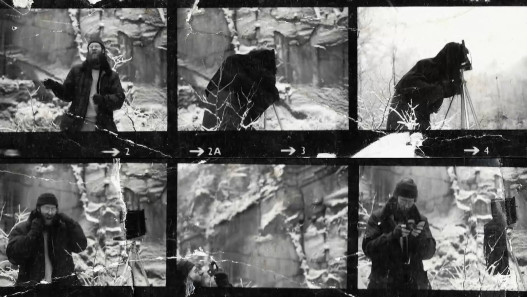
EDGE IS EVERYTHING is a love letter to photography and to the art of truly seeing. For over 30 years, Thomas Joshua Cooper has photographed the furthest edges of land with a 19th century camera. His work bears witness to landscapes transformed by climate change while recovering forgotten histories of migration, exploration and departure.
Cooper draws on his Native American heritage and an extraordinary archive of audio interviews he recorded in the 1970s with photography’s most influential figures, including Ansel Adams, Man Ray, Imogen Cunningham and Paul Strand. These previously unheard tapes create a rare intergenerational conversation about photography and artistic practice.
The film also examines the cost of an uncompromising creative life. His wife and adult daughter reveal the impact of his prolonged absences and challenge the mythology of the solitary artist.
At a time defined by speed, distraction and instant images, Edge is Everything asks what might happen if we slowed down long enough to fully observe. This question has guided Cooper since childhood, when he was taught by his Native American elders: “Each of us has an eye that sees and a seeing eye. When you learn which is which, you will have begun to become human.”
Captured as an elephant calf, Mangal encounters both love and loss as he is made to join the world of humans. Transported from one place to another, changing hands, he ultimately becomes a revered deity worshipped as God, yet tied in chains, until he decides to break free.
A 50-year-old widow, Emma, has lost everything since her husband, Sam, was killed and her final refuge, a holiday lodge in Cornwall is due to be repossessed too.
She is harried by debt collectors, seeing things, agoraphobic, and convinced she is losing her mind. Desperate, she calls for help from any God listening, and in a dark wood, something hears her.
Her dead husband is haunting her and appears and talks to her in the dead of night.
Emma’s starts to experience dreams of a magical wood and strange figures of butterflies and men made from twigs start to appear in and around the lodge.
Sam is advising that she must let go of the old, in order let a new life in, but this terrifies Emma.
Emma starts to see moments from her future; each bleaker than the last and fears for her own survival.
With eviction imminent, Emma agrees she must surrender, whatever that might mean.
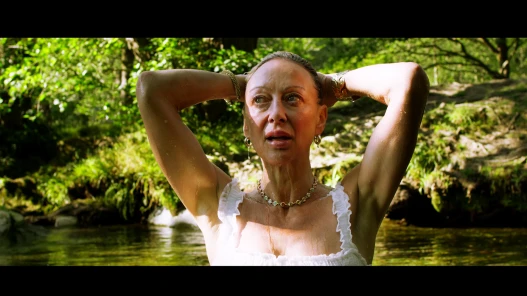
A creature made from forest appears and helps her to escape. She follows it into the magical wood from her dreams and is baptised in a beautiful river. When she emerges, she is reborn and ready for her new life.
Adlais (Echo) weaves Welsh language folklore and histories through their shared subjects of poetry and drowning – and asks whether we’re listening to the past as it surfaces today.
Set in the rolling landscapes of the Cotswolds, a documentary exploring the lives, challenges, and traditions of the farmers who shape this iconic countryside. Through intimate conversations with a new generation and those who have worked the land for decades, the film reveals how farming families are navigating change - from shifting economics and environmental pressures to evolving ideas about land stewardship and community.
Rooted in place and guided by the voices of those who live it every day, the documentary offers a rare, personal portrait of modern rural Britain and the people working to sustain both land and livelihood for the future.
What if you went on a holiday and the apocalypse happened?
GALICIA! is a found-footage, hybrid-documentary following a couple through home video footage as they visit their friends at a winery in rural Spain and inadvertently capture the end of days.
We live in a time where the sense of our impending mutually assured destruction is more real than it’s ever been. GALICIA! Takes the form of a holiday video - a document of a couple before - and after the great cataclysm. The film starts as something that feels unedited - an accidental video diary of an ordinary couple that feels somewhat ghostly as much as it is also pedestrian. As the film evolves and degrades, we are led to question the fragility of humanity, as well as its power to endure.