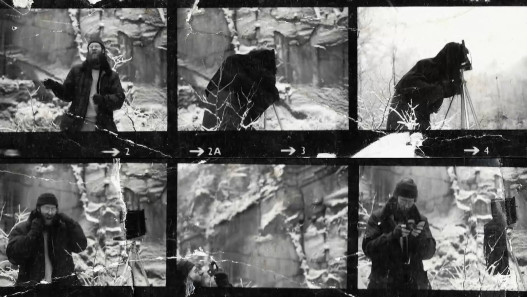
EDGE IS EVERYTHING is a love letter to photography and to the art of truly seeing. For over 30 years, Thomas Joshua Cooper has photographed the furthest edges of land with a 19th century camera. His work bears witness to landscapes transformed by climate change while recovering forgotten histories of migration, exploration and departure.
Cooper draws on his Native American heritage and an extraordinary archive of audio interviews he recorded in the 1970s with photography’s most influential figures, including Ansel Adams, Man Ray, Imogen Cunningham and Paul Strand. These previously unheard tapes create a rare intergenerational conversation about photography and artistic practice.
The film also examines the cost of an uncompromising creative life. His wife and adult daughter reveal the impact of his prolonged absences and challenge the mythology of the solitary artist.
At a time defined by speed, distraction and instant images, Edge is Everything asks what might happen if we slowed down long enough to fully observe. This question has guided Cooper since childhood, when he was taught by his Native American elders: “Each of us has an eye that sees and a seeing eye. When you learn which is which, you will have begun to become human.”
Following the director, Beryl Richards's adopted son Nathan/Joe’s journey from a one-year-old to adulthood, told from the viewpoints of parent and child.
Joe wants to make this film so people ‘get’ him, know what it means to be neurodivergent, and what he has been able to achieve despite many challenges. Beryl shows the evolution of a family created from scratch that’s had to keep adapting. The challenge and recalibration of being a parent and a lifetime carer.
The core of the story is told through 28 years of home movie footage- sparky, warm and funny as Nathan/Joe develops into the man he is today. Alongside, a growing boy is shown, much misunderstood and almost destroyed by the prejudice and ignorance surrounding neurodivergence. The family therapy received along the way offers some support, but also reveals how the family dynamic was influenced by Beryl’s own experience of childhood neglect.
Beryl first saw 6-month-old Nathan on a VHS tape. She and husband Dave responded with a video welcoming him to their home. For the past 28 years Beryl has recorded “our feelings, our joy and our pain" so that Nathan could better understand his story later in life.
When filmmaker Lilyana Torres learns that her grandfather hired hitmen to nearly kill her father, she sets out to confront him in Tamaulipas, Mexico, and force an apology.
The attack left her father with cracked ribs, a broken nose, and loose teeth. Its architect was his own father. Like much of Lilyana’s family history, nobody spoke of it again. So she begins planning his murder.
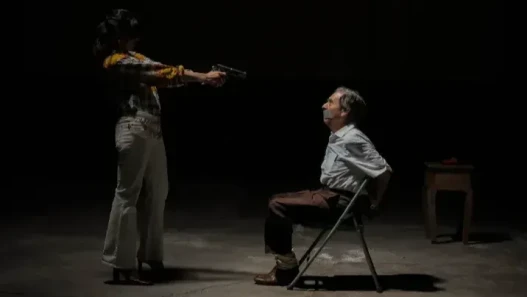
In darkly comic fictional reenactments, Lilyana trains for revenge with the help of a retired detective. Some methods are efficient, others grotesque, all adapted to an ageing man. Against these fantasies, family home videos reveal a more unsettling contradiction: birthday parties, tenderness, and a grandfather who once appeared devoted to his son and granddaughter. How could a parent put their own child’s life at risk?
Before Lilyana reaches him, her grandfather dies peacefully in bed, taking every explanation with him. Determined to complete the film, she casts an actor named Perfecto to play him and kills him on screen, again and again. But the performance exposes the question she cannot escape: what does revenge actually resolve?
Lilyana confronts the possibility that the violence she wants to destroy may already live inside her.
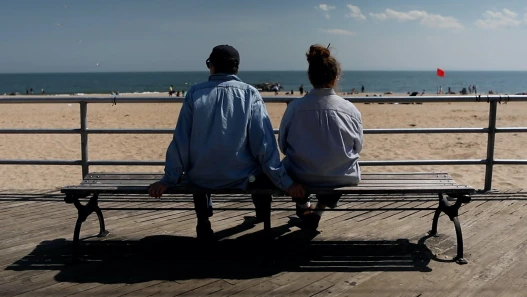
An intimate journey through the storied careers and private lives of Lois Weaver and Peggy Shaw, the visionary founders of Split Britches.
Through behind-the-scenes footage, exclusive interviews, and a deep dive into their most influential performances, we uncover how Split Britches have transformed discussions around gender, identity, and the role of performance in political activism. Throughout this journey we also uncover the real love story behind their life’s work - a universal tale of support, trial and tribulation.
Shot on location in both Upstate New York and New York City LOIS AND PEGGY reveals the essential domestic side of this iconic performance duo and lays bare the complexities of two artists juggling their work and their relationship simultaneously. Showcasing the depth, complexity, and universality of love, this documentary makes a valuable contribution to the cultural and historical legacy of LGBTQ+ communities - capturing and preserving the experiences of love and relationships within a context that has often been marginalized or erased from history.
A chance visit at a historic murder/ suicide location in Manhattan inexplicably draws a film producer into the crime and inner world of the murderer, American visionary poet and sun mystic Harry Crosby. As her research spirals into obsession, her grip on reality frays, culminating in a harrowing burnout- until she discovers a shocking personal link to the killer.
An original and emotional film dealing with the surreal nature of art and trauma.
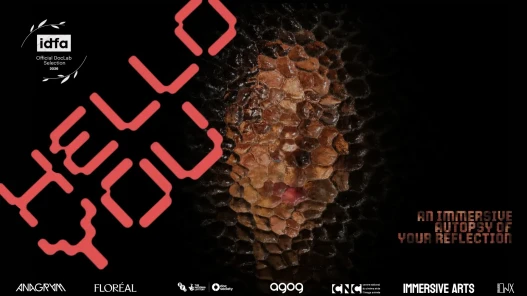
Hello You is an autopsy of your reflection. This mirror has two sides: one that observes, and another that follows. Exploring stories of altered perception, from phantom limbs to the feeling of being a stranger in your own body, the experience stretches the split-second act of self-recognition into something you can watch unfold. Here you are asked not to look at yourself, but at the lenses through which you look.
Ann finds herself on unstable ground after the death of her father. Growing up in a boarding house in Stockport with her mum, her obsession with music and her friendship with Hel are everything. But when local band Joy Division’s frontman Ian Curtis kills himself and Hel leaves town, everything collapses. Ann is drawn to alcohol and casual sex, but a magical rekindling of the past and a rediscovered cassette tape opens a door to a new beginning.
Official Selection BFI London Film Festival 2026 - Competition
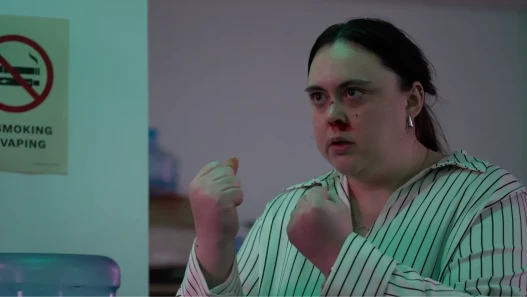
The story of Terry, a woman with no life beyond the ones she finds in her period romance books, and how she is forced into the real world when a glib comment at work causes her to punch the office misogynist, Kier, in the face. While everything in her screams to apologise and restore the status quo of the office, she can’t help but notice that things are better for everyone after the punch. Maybe things shouldn’t go back to the way they were? Needing someone to confide in, Terry finds an unlikely ally in nerdy introvert neighbour, Ember, who challenges Terry to lean into this newfound fierceness. Fight for more changes, small as they may be. Even put down the demure romances and pick up some epic fantasy. In order for the shy and mousey Terry to stand her ground and champion the changes she wants to see in the office, she must step away from the wall and be like the main characters she finds in her books. And she needs to do so fast, because Kier wants a rematch. Fantasy begins to bleed into reality as the office becomes grounds for the ultimate battle.
When a late bloomer is drawn to her carefree younger colleague, their disappointing first kiss shatters her fantasies, forcing her to confront the messy realities of human connection.
Northern Irish Nollaig begins her Geo-astrophysics internship studies, in the unfamiliar city of Geneva. Its alien nature is compounded by the dominant characters of her host family David and Helen Wilcox, members of the diverse expat community, where the required external presentation of wealth and power is essential - a cloak to their hollow forms.
Nollaig is without self; her observational neutrality disarms, pushing those around her, to only crave more from her. Nollaig anchors her own sense of purpose by blood ties - her Uncle Nigel. His criminal past as a jewel thief, activates Nollaig’s first direction to become a skilled diamond thief herself.
In her exploration of unversed theft-ingesting and passing practices, Nollaig experiences a far more visceral and violent shift of value. Bodily destruction, radical weather events, cracks beginning to form. As Nollaig starts to become stronger, she is no longer a vessel but now an opponent - speaking to the vulnerability of the world and human presence around her. A violence of humanity in its purity. From a violent act, a benign outcome is born and Nollaig transforms everyone in her orbit.