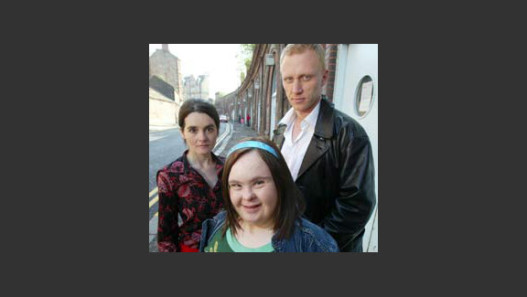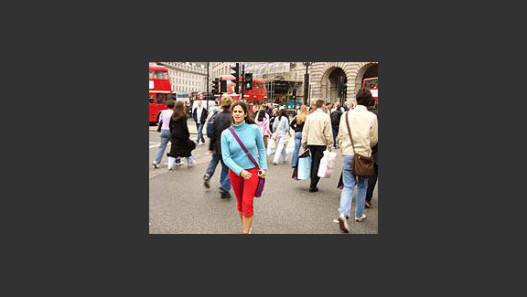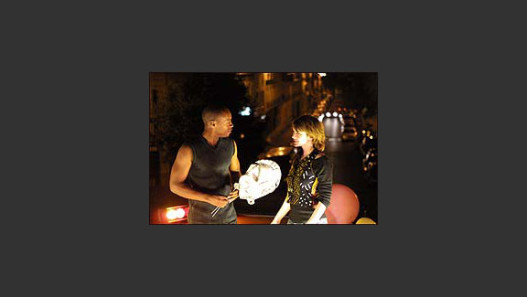
The big day has arrived - everything is planned. He's going to propose to his girlfriend - it will be the perfect day. But when he sees her at the station, he sees a bizarre man who keeps appearing, seemingly to no-one but him. Turning this into a hell of a day!
Riva is the portrait of a woman, Riva Ben Eliezer, now ninety years old. How do you look at the life of someone who has lived through so much? I would look at her hands, wrinkled and old, and think, these are the hands that did all those things, that were communist in Palestine, that were imprisoned and tortured, that bore children and a great and terrible war, that lived in Siberia, that taught kindergarten, that wrote books. These hands, no other, did this, and this is what they look like now. This is what time and life has done to my grandmother's hands.
But the film is more than that. It is more than a portrait of a woman who lived through extraordinary times, who was a Jew in a place and time when there was nothing and nowhere worse to be. It is the portrait of a whole life, not just the sections that have the most drama. It is the portrait of her now - for now contains all her past, somehow, in her hands and in her face. In her voice and especially in her laugh.
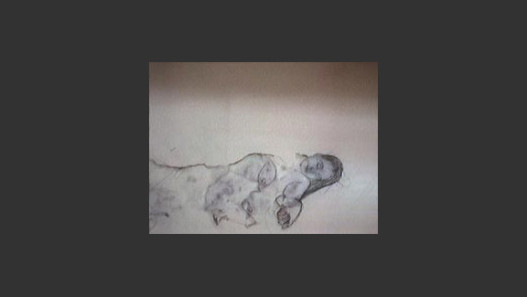
It is a private film made for the public. The use of hand processed images, with their patina of blotches and scratches, creats a space for Riva to exist, where the presentation of her ninety-year-old body is not intrusive but respectful. It is a private film also because it was made in private, just me and her, so our relationship becomes a part of it.
It is not my intention with this film to deify Riva. Just to show her, as I see her, because it is important to see the lives of others, lives that have been deeply lived, as Riva's has.
An ironic look at the way newspapers report children's deaths, accidents, bad mothers, angry fathers and the bogeyman. Based on the film maker's archive of newspaper clippings, these are terrible stories that make great copy. With an inventive mix of still photography and live action, the film sweeps around Britain to create a chilling comment on death, news reporting and the family.
The humdrum lives of four women are transformed by the arrival of Italian femme fatale, Sophia Rosselini and her School for Seduction.
For Clare, Irene and sisters Kelly and Donna the 'School for Seduction' is a much needed break from reality, promising much - how to be sexy, seductive and in control.
Initially the course is simply great fun and the women are unleashed on their unsuspecting partners with comic, sometimes uncomfortable but often-hilarious results.
However, all appears to be shattered with the arrival of Sophia's estranged husband and a shocking revelation.
Sam is happiest when he's scooting.
While his mother negotiates the pitfalls of a broken marriage, Sam has a special way of escaping to 'his own magical world'. But only if two wheels are on the ground.
Fighting over a television remote control, an eight year old girl and her little brother break a window. Mum will soon be home. What will they do? What will they tell her?
The two of them come up with a quick scheme to sort out the grave problem at hand; an emotional roller coaster that marks the end of their innocent cosy world. In the next ten minutes big sister comes up with the perfect plan and to her surprise, little brother becomes her unquestioning follower, or so she thinks.
Senses is a feature-length portmanteau film divided into five parts. Each part is named after its story's protagonist, is written and directed by a different person, and set in a different part of the world.
The stories are not exactly related to one another except through their thematic link to one of the five senses. Each story is very different in terms of narrative, tone, and adopted approach to its theme, crossing genre boundaries to give Senses a broad and rich appeal.
Part One: Anna
Anna, a cellist in her 20's, arrives at a remote church by the coast to stay with Helen, an old friend of the family who now lives with reclusive retired music conductor, Rashid. While there, Anna learns that Rashid is afflicted by a mysterious malady which forces him to hear human suffering as it occurs throughout the world. A malady with which she herself will come to be afflicted.
Part Two: Jerry
Jerry Sitzer is a native New Yorker who has a pre-occupation with underwear. Musing over his life, Jerry sorts through his neuroses, memories, and guilt on a quest to find true love after yet another failed relationship.
Part Three: Arthur
Arthur Stone is a freelance paparazzo, addled by a worsening amphetemine addiction and consumed by bitterness and disillusion. When he snaps a shot of what he thinks may be the clue to a murder and threatening notes begin to appear, his life and mind begin to derail, forcing him ultimately to confront his own values and double-standards, as well as the supposed infallibility of the recorded image.
Part Four: Zoe
When Zoe decided to go visit her friend and ex-lover Claude in Paris, she discovers that he now lives as a transvestite in a commune dedicated to the pleasures of food and flesh. At first drawn to the sense of free abandon inside the House, as the night wears on, she realises that there is still hope of finding that unique spice which could make sense of her life.
Part Five: Anais
Their marriage on the verge of collapse, Anais and Moncho journey to San Pedro on the edge of the Attacama Desert to meet a shaman named Abuelo Peto. He introduces them to the San Pedro cactus, a hallucinogenic plant that he says will help them understand their problems and each other better. Together they begin a journey that they hope will save their relationship, but with almost tragic consequences.
Lost in a daydream, an innocent young man gets a come-on from a sexy siren. Engaged in the pursuit of this bewitching vision, a lost shoe invites a display of athletic daring from our lovestruck hero.
A story of desire and determination. "Cinderella with a twist".
One soundtrack runs simultaneously to three visual narratives, as snatched moments bring back memories of a younger self. A film about time and growing up.
Annie wants to find her cat and forget her past. She walks the streets of the East End of London, in the footsteps of Josef Stalin and Mahatma Gandhi. Annie's obsessive journey through local history triggers an unravelling of her own life.