During the Bosnian conflict the population of Sarajevo spent almost four years under seige. This is a story of how a troubled youth strove to keep their sanity through the music they made; parties they organised and radio they broadcast. We chart the last ten years of a music scene and a youth culture still carrying the scars of war but looking toward the future with hope and spirit.
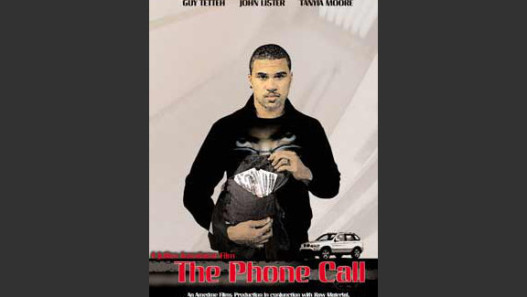
Quentin is awoken one morning by an old school friend called John. John asks him to do him a favour and the film follows the repercussions of the favour.
The Tulse Luper Suitcases is a sweeping trilogy/epic about the life and times of Tulse Luper, a man bigger than the world itself. The film covers some sixty years of recent history from 1928 when the existence of a substance called Uranium was discovered, to the collapse of the Berlin Wall and the end of the Cold War in 1989.
Tulse Luper, a writer and project-maker, is caught up in a life of prisons. There are a total of sixteen prisons in the story starting in South Wales, when Luper is ten years old, locked up for three hours by his father in a coalhouse for running the gauntlet of a series of backyard gardens to sign his name on a crumbling brick wall that collapses. Twelve years later in 1938 in Moab, Utah, Luper is arrested through his contact with an American-German family about to travel to Europe to engage explotatively in the Second World War. Four members of this family, deeply fascinated with Luper, will act as his jailers, with others interested in uranium, around Europe for the next ten years. In the Cold War years he is imprisoned in Moscow and Siberia, before appearing in Hong Kong and Kyoto. In the 1980's Luper was apparently sighted in Beijing and in Shanghai. He was last seen in a Manchurian desert. Luper learns to use his prison time, writing on the prison walls, inventing projects in literature, theatre, film and painting, and engaging with his jailers in all manner of plots, schemes and adventures. Because of their responsibilities, jailers are as much prisoners of their prisoners as they are freemen, and this connection between jailer and prisoner permeates this project and provides a geat deal of its drama.
As Luper's reputation as a writer and project-maker grows in Europe and America, so his person becomes more fictional. A large 'Luper' Symposium and Ehibition is held in the Brooklyn Museum in New York. Many Luper lecturers offer their theories and propositions on the various stages of Luper's life. The central exhibit of the conference and exhibition is a collection of 92 suitcases - 92 appropriately being the atomic number of uranium - suitcases that Luper has supposedly been associated with in his travels and prisons. Over the years, the suitcases come to light all over the world.
On the last evening of the 'Luper' New York Conference, a long awaited Luper suitcase - suitcase 92 - is opened.
A young man, Aldo Formazzoni, has been given the task, from an early age to avenge his family feud of 100 years. The feud began in Old Naples, with the murder of a young boy who was beginning to move in gangster circles.
Aldo's great Uncle was on the run from the police, after partaking in a jewellery theft, and was gunned down in cold blood after surrendering. And The Vendetta has begun.
After various attemps by the Formazzoni family to even the balance, it comes down to Aldo to perform this act of honour.
As well as having to kill someone from this family his Uncle asks him to join in the 'family business'. Aldo declines and so a bloody story begins.
While on the run from his Uncle, Aldo must still hunt for the Innocent descendant, Johnny Trieste, of the policeman. Circumstances dictate that Aldo hijacks a young woman, Megan Reed, and a strange dynamic begins in the car and on the move.
The film moves on various time-lines; from Aldo's childhood, to the action of The Vendetta and its question of honour, and the possible romance that builds within this intense period of time.
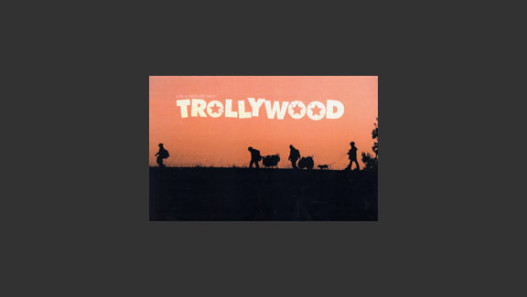
Trollywood initially started out as a collection of still photographs. The director, up and coming UK talent Madeleine Farley, was fascinated by the isuue of homelessness in Los Angeles, a city renowned - or at least in popular conception- for its opulence. As a symbol of material divide, Madeleine decided to focus on the humble shopping carts littered around LA as a central theme- ie. as both consumer tool to some whilst being a portable home to others.
Through her time spent photographing the homeless and the numerous conversations that ensued, Madeleine soon realised that there was a vast untapped wealth of personal testimony and that only a documentary could do the subject justice. This view was further cemented when a news story broke about an LA legal case involving the making and profiteering from a video called 'Bumfights' in which homeless people, often under the influence of alcohol, were filmed inflicting harm on themselves. The makers of the film, whilst making in the region of $6m dollars, were let off with 250hrs of community service.
Trollywood will focus on interviews with the homeless, Government officials, Charitable foundation workers, Mental health organisations etc. in a moving, well rounded look at a serious issue. More than anything, the programme will aim to be educational and uplifting, presenting homelessness with a human face and also providing an awareness of various remedial organisations. Essentially, Madeleine's intent is to show that amongst great material deprivation there exists a unique culture with its own sense of spiritual wealth.
Two days in the life of Alex DeMello - a narcissistic, drugged-up wannabe yuppie - who sets out to uncover the sinister secrets of his demonic company superiors, but ends up losing his briefcase, his car, his friends, and his mind.
During his trip across the bad side of the city, Alex stumbles across car-wrecking psychopaths, all-seeing telephone operators, a knife-wielding skate-boarder, and finally his indestructible corporate rival - The Man.
A dark, dream-like psychological thriller about urban paranoia, yuppie greed, corporate manipulation, mind-altering substances, sex, death, betrayal, and a cuddly toy called Mr Buttons.
Achieve Synergy.
From director Ian David Diaz and producer Julian Boote, who brought you the award-winning cult Brit-Flick, The Killing Zone (Grand Jury Prize, Best Feature, LA International Independent Film Festival 2000), Dead Room is by turns a dark, tense and sometimes bizarrely comic story of the various occupants of innocuously numbered Room No, 2. An otherwise ordinary flat in suburban London, owned by an untrustworthy Nigerian Landlord, No. 2 is a room born bad. You know the kind… bad karma on top of bad décor! It inevitably attracts all the wrong people, and something weird always happens there.
Giving examples of its four latest occupants - a gentle writer being driven to murder by a cruel prankster; an ill-prepared trio of women falling foul of a self-perpetuating chain of evil; a TV journalist following an alien-obsessed, barking mad assassin; and a homeless man's encounter with a crazed Stalker and her victim - the Landlord shows us just how macabre and downright odd the room's history really is.
Set in a bed-sitting London many will find all too familiar, Dead Room follows the grand tradition of Dead of Night, Creepshow, and Twilight Zone The Movie.
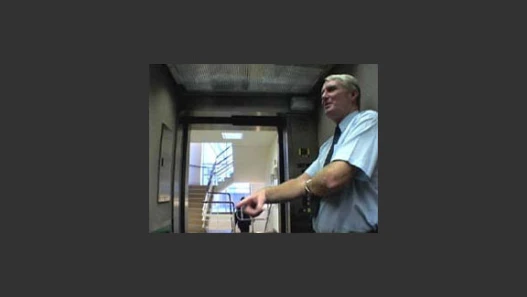
Blinded in 1976, Martin Shail now works as a lift operator. This film intimately portrays Martin's experiences since becoming blind and captures his encounters with the various people he meets in his lift.
Michelle is young, bright and attractive, leaving prison with a spring in her step and determined to steer clear of the heroin that led her here. Shaun is getting out after a year, his mother Angela there to greet him and take him home to start anew.
In improvised scenes drawn from their past and present experience, Michelle is tempted by a junkie friend and succumbs to an overdose, while Shaun tries hard with his friend Carl to stay straight. It's only a matter of time before Angela's suspicions are confirmed as they return to drugs and thieving. Michelle continues her fighting descent back into addiction, revealing the defining moments of her life: the death of her mother and her father's effective abandonment of her. Angela discusses with Carl's mother the impact of heroin on their lives and her relationships with other men, recalling the despair that led to her attempted suicide. But it's her love which keeps Shaun going, the love Michelle has lost.
In this powerful, often emotional film, Hollywood-bound film director Paul McGuigan achieves a vibrant modern approach to the kind of creative documentary originated by Robert Flaherty and developed by Humphrey Jennings.
Milan, Italy. 1960. Rosetta Susannah Di Curci the feted colouratura soprano is on the brink of superstardom when doctors diagnose a cancerous polyp on her vocal chords. Rosetta chooses to have surgery but knows she will never perform again.
Forty years later, Rosetta lives as a recluse in a city in the north of England. The spectre of her career failure continues to haunt her.
Into Rosetta's life comes Eddie Banks, owner of a small independent record shop. Eddie fights to maintain his prime-site business against cut-throat competition and corrupt estate agents.
Against the backdrop of their own personal traumas, Eddie helps Rosetta to rediscover her zest for life. In return, she shares her unique personal philosophy with him.
Fearing she will become ill again, Rosetta makes contact with the daughter she gave up for adoption forty years ago.
A drugs-dealer double-crosses and kills a drugs trafficker in the remote West Coast of Scotland. The dealer gets arrested and finds out he was seen by a couple of local people. Sitting on remand facing life imprisonment, with only two unnamed witnesses from the one street hamlet of Bartoun standing between him and freedom he decides to hire a hitman to kill all the potential witnesses.
Outside a rural police station the hitman starts a stopwatch, jumps into his car and sets off down the road. He drives at full speed through the barren country roads until he pulls up in Bartoun. He jumps out of the car and stops the stopwatch. It reads 28 minutes 36 seconds.
At noon the next day the hitman strides down Main Street, pulls out two handguns and starts shooting. Once his intial attack is over he starts his stopwatch, sets 28 minutes 36 seconds, counting down. This is how much time he has to kill everyone in the village before the police can possibly get there. Pandemonium follows within the village as he methodically hunts down his targets and people frantically try to stay alive.
The Veranda is about a young artist, Victor, who tries to find silence in his actions and work. He finds it in dialogues with nature; he becomes obsessed and devotes his life to 'The Gaps', which to him become a mystical separate world that defy comprehension. Diving into this discipline, he loses his wife Josy, his friends and everything else in his life.
The actions Victor performs to find these Gaps are seen worldwide; cleaning sections of desert, or walking a mile and watering the parched land, just to see what happens. He places a tree in ice, cleans shadows on the road laid down by trees, polishes rocks at Whitby, and takes 1000m of string across a huge valley to make a Stringbridge - These performances, actions or Happenings are all to find something 'other'.
We meet Victor before and after his fifteen year quest. After various meetings with Charlie, who comes from the silent world he strives for, Victor has to decide between the faith of his Gaps and his last links to humanity, his sister Mina and his daughter Jo.
Winner - Best Foreign Feature Award, Los Angeles Independent Film Festival 2002.