
Undead Sun
Synopsis
Details
- Year
- 2014
- Type of project
- Shorts
- Running time
- 13 mins 40 secs
- Format
- Red
- Director
-
Jane and Louise Wilson
- Producer
- Ohna Falby
- Executive Producer
- Steven Bode
- Editor
- Daniel Goddard, Colm Rourke
- Screenwriter
- Jane and Louise Wilson
- Director of Photography
- Martin 'Teddy' Testar
- Production Designer
- Nicholas Mortimer
- Sound
- Barnaby Templer
- Principal cast
- David Wayman, Scott Wickes, Jack Mayer, Luke Cook, Genevieve Crean, Apoa Falby Clark, Madeleine MacMahon
- Production Assistant
- Alix Taylor
- Researcher
- Cecilie Gravesen
- Production Accounts
- Sophie Luard
- Art Director
- Charlie Yetton
- Costume Designer
- Chloe Gross
- Wardrobe Assistant
- Apoa Falby Clark
- Focus Puller
- Daniel Brough
- 2nd Camera Assistant
- Joshua Dadson
- Grip
- Dean Steadman
- Gaffer
- Martin Kloud
- Electrician
- Joe Gainsborough
- Diver
- Mirik Smit, Myles Radcliffe
- Camera & Grip Equipment
- Lewis Testar
- Lights
- Panalux
- Camera Transport
- Pierre Tucker
- Insurance
- Robertson Taylor
- Colourist and Online Editor
- Colm Rourke
- Animation
- Apoa Falby Clark, Natalie Wyle
- Graphic Animation
- Prime Focus
- Prime Focus Designer
- Jason Guest, Bryan Servante
- Prime Focus Producer
- Carle Duthoo
- Voice Over Artist
- Heike Brinkmann
- Sound Mix
- Fonic Studios
- 'Hide and Seek
- Camouflage, Photography, and the Media of Reconnaissance' by Hanna Rose Shell, published by Zone Books, 2012. Excerpted by permission.
- With Thanks to
- Caroline Smith, Tom McCarthy, Sara Bevan and Heidrun Gassner from IWM (Imperial War Museums), Tatiana Ojjeh, Victoria Luxem and Gemma Holsgrove of Artliner, Graham Rood and Ken Odgers of the Fast Museum, Farnborough, Barnaby Laws from Panalux, Simon Parkinson from Aspire Defence, Dave Morgan, Art AV
- Special thanks to
- Artliner, Pall Mall Barbers, Prime Focus
Genre
Categories
Production Status
Production Company
Page updates
This page was last updated on 12th May 2025. Please let us know if we need to make any amendments or request edit access by clicking below.
See also
You may also be interested in other relevant projects in the database.
 The Toxic Camera
Director: Jane and Louise Wilson
Year: 2012
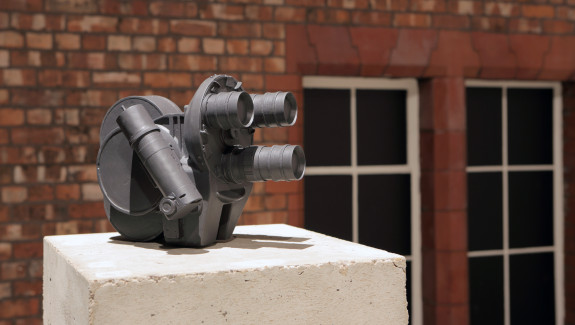
Toxic Camera, inspired by the film Chernobyl: A Chronicle of Difficult Weeks by Soviet filmmaker Vladimir Shevchenko, reflects on the material nature of the film and the human impact of disasters like Chernobyl.
 Matter of Britain
Director: Peter Treherne
Year: 2026
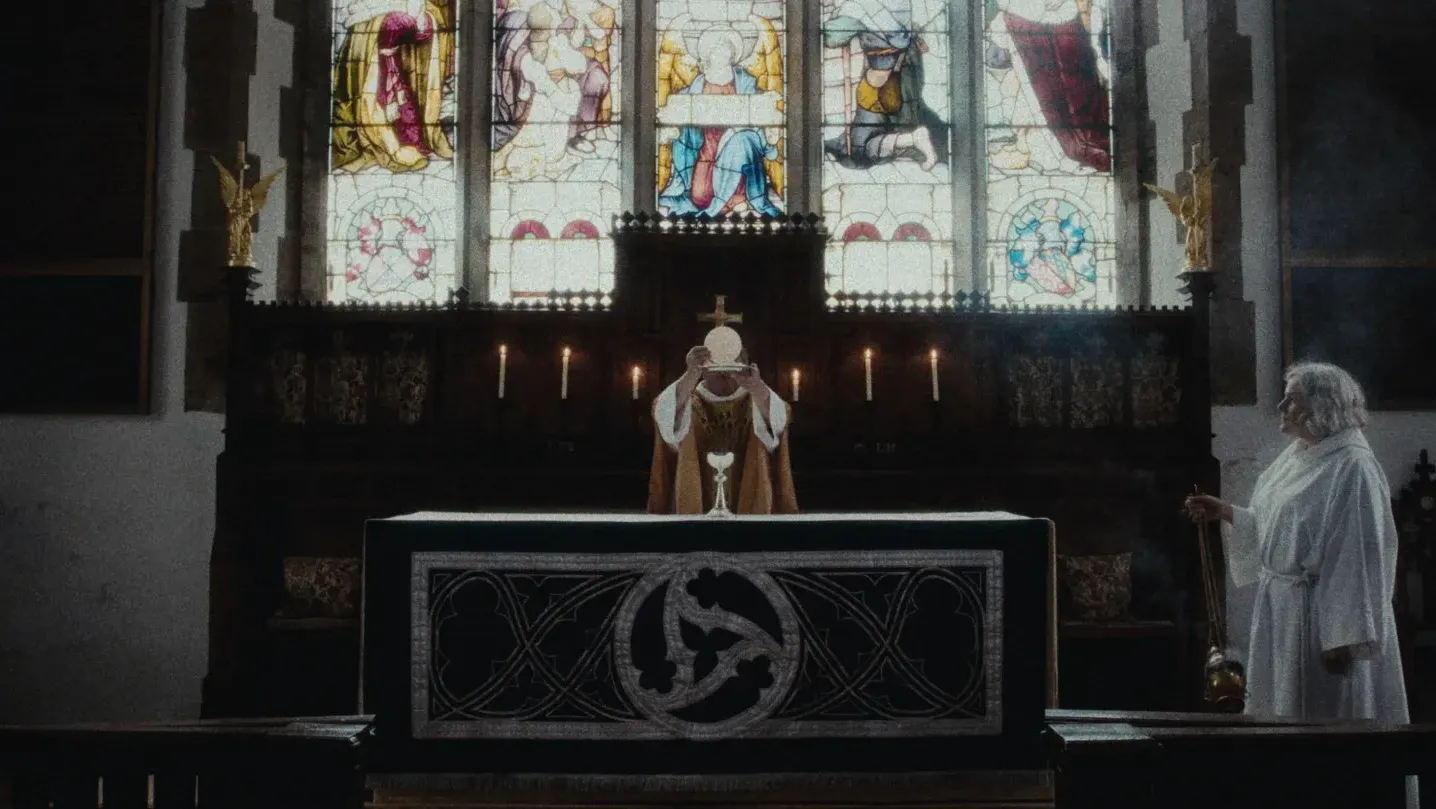
MATTER OF BRITAIN was an English country village’s performance of the Holy Grail myth. In that myth, King Arthur’s knights quest for the Holy Grail in order to heal their wasted land. The performance took place over 12 months from 2023 to 2024 in multiple locations across the parish of Mayfield, East Sussex. Over 300 members of the community took part as questing knights, angelic choirs, guiding anchorites and tempting devils. The performance was documented and subsequently made into an ethnographic fantasy that has screened at the Museum of Modern Art, CPH:DOX, Cinéma du Réel and Open City Documentary Film Festival. The work was supported by an Arts Council England Project Grant, the Lund Trust, High Weald AONB, East Sussex Arts Partnership, the University of Reading and the Museum of English Rural Life.
 Vanishing
Director: Mandy Williams
Year: 2023
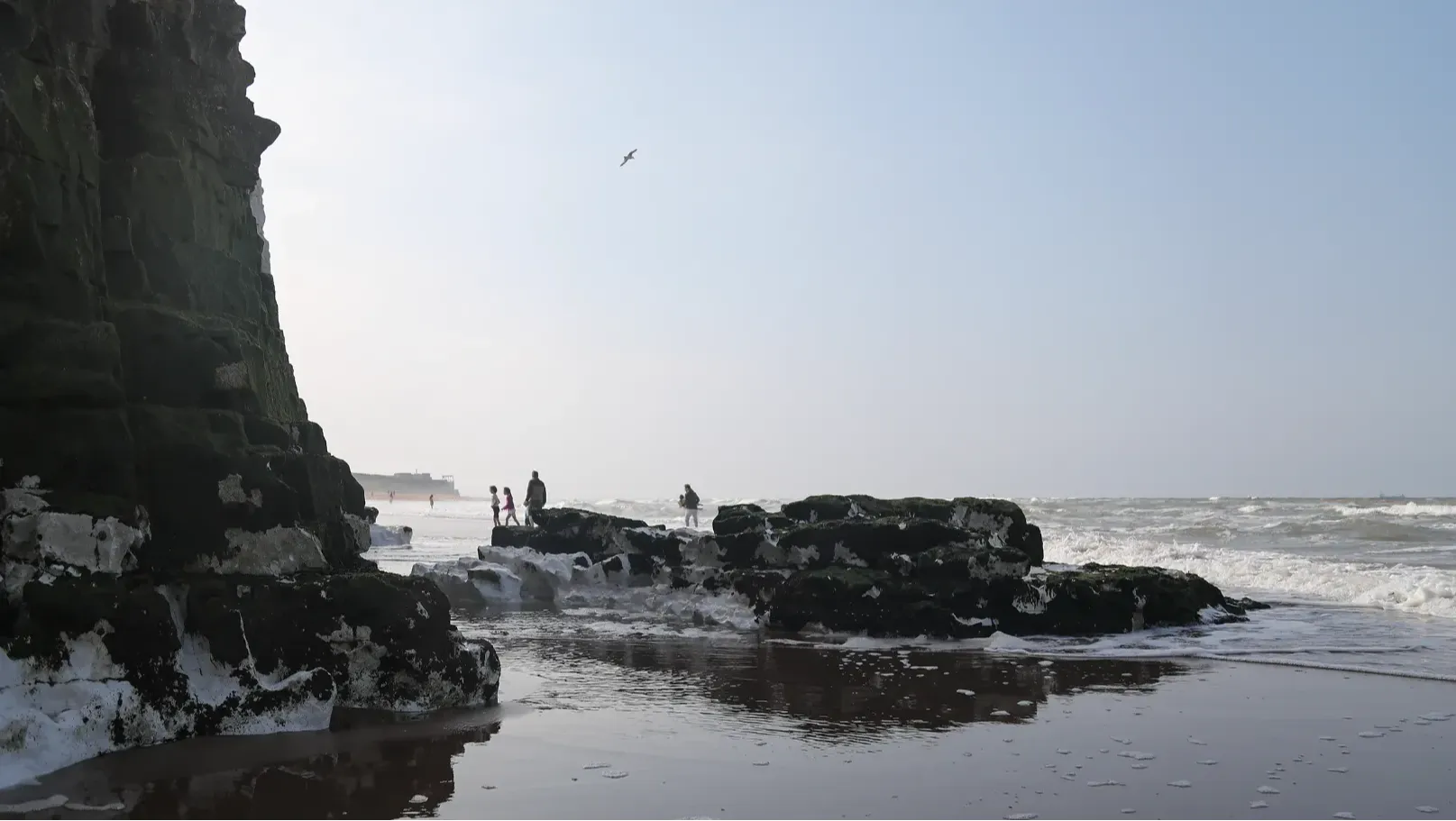
A six-minute experimental film about the climate crisis with a narration arranged in seven sequences. The themes of coastal erosion and rising sea levels emerge and submerge throughout the film, drawing on history as well as possible futures. The video's exploration of coastal erosion and the role of fossil fuels begins from a local south coast perspective, while highlighting the global crisis.