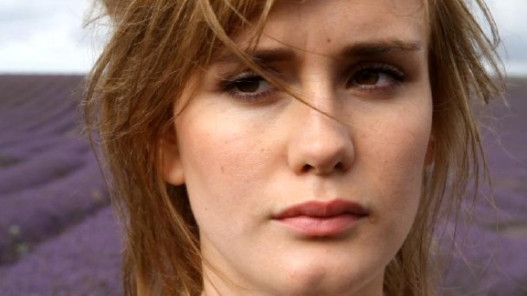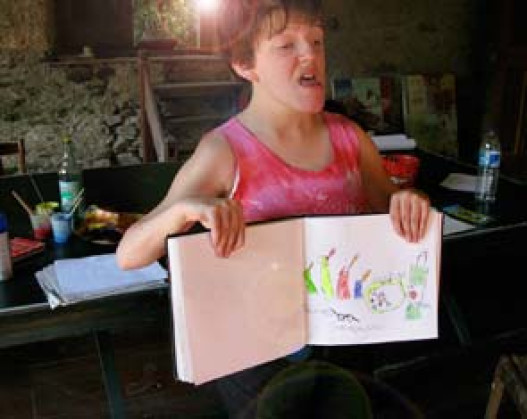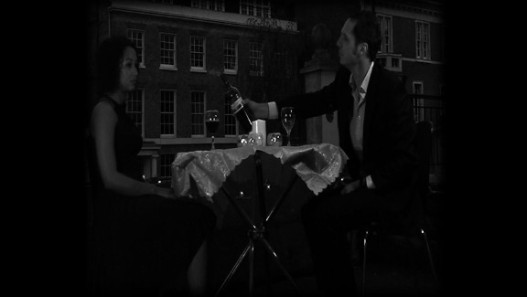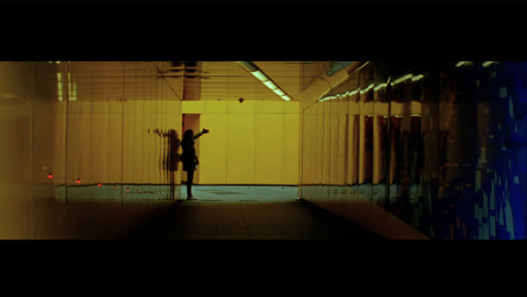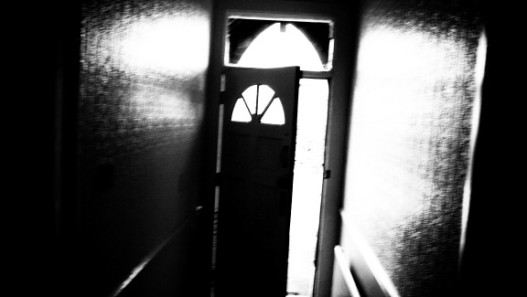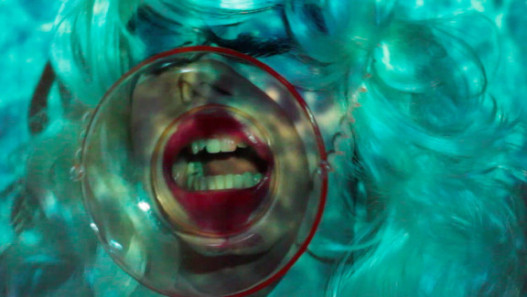
Marion is a former actress who has committed murder. She is put in to a institute and slowly we discover she has Multiple person Disorder. Marion has over 30 different personalities each personality is played by a different actor there is one main actor playing the real Marion. With her mind in jepordy all Marion has left is her talent to escape
With each of its 54 shots recorded on a different day, this silent portrait of a window cleaner uncovers the kind of beauty that is indeed everyday and all around us, but which can also remain strangely obscured by the temporality of living itself.
A team is at work dissecting what appears to be an ordinary bush. The examination is carried out with such conviction and reverence, towards something which is seemingly so mundane, that the whole process appears quite absurd.
Filmed during a Gulbenkian Galapagos Artists Residency.
King Dong offers a vhs-tinted glimpse into the mind of comedy filmmaking obscurity Len Cella, who for forty years has strove to make the lowest-brow films and videos with all the seriousness of an auteur.
A boy is looking for love. His goal is to find an interesting, pretty and smart girl who makes he feel in love. The special one, his dream girl. For this reason, he will meet with three different girls in three different places.
In 1987 as BSE spreads across Britain and a mystical 'harmonic convergence' is foretold two gangsters Gill and Rokit roam the country seeking a place to lay low with their loot until things cool down.
What transpires takes them on a surreal journey to their ultimate destinies.
Maybe if David Lynch had remade The Wicker Man it would have looked something like this.
MOVE, is a short film fusing the worlds of traditional Highland pipe music and urban hip hop, shot on location in Mid Argyll. This dynamic short film is the result of a unique collaboration with Wild Biscuit, Mid Argyll Pipe Band and Scotland's No1 Hip Hop Crew, Random Aspekts.
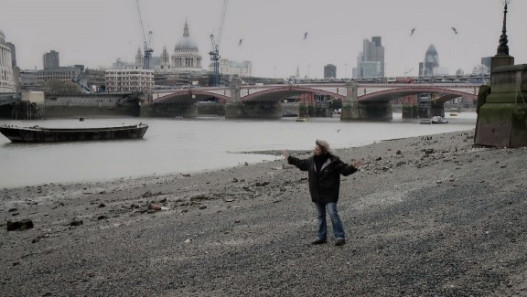
NYman with a Movie Camera is a 64 minute feature film conceived and directed by Michael Nyman. The film presents a shot-by-shot reconstruction of Dziga Vertov's iconic film 'Man with a Movie Camera', replacing the original sequences with footage from Michael Nyman's own film archives shot over the last two decades.
Deeply rooted in Vertov's original ideas concerned with 'the Perception of Truth', the documentation of 'life as it is' and that of 'life caught unawares', Nyman's film attempts to capture the essence of 'what is there', and reflects on what he calls the Persistence of glance, a multi-sensorial experience of time as it occurs, of life as it happens and as recorded by the human memory. The film is a modern-day take on experimental documentary film making through the bias of cinematographic collage. It proposes to renew a discourse with the ideological and aesthetic precepts once defended by Vertov in his pursuit of the ultimate 'cleaning up' of film language from the 'corrupting influence' of Drama.
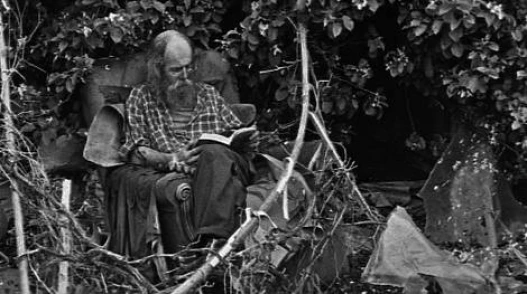
Robinson in Ruins is an account of a journey by a wandering, erratic scholar, through landscapes in the south of England. Its fictional narration begins: 'When a man called Robinson was released from Edgcott open prison, he made his way to the nearest city, and looked for somewhere to haunt'.
Robinson ‘believed he could communicate with a network of non-human intelligences determined to preserve the possibility of life’s survival on the planet’ and ‘was equipped with an ancient ciné camera, with which he made images of his everyday surroundings’. He surveyed the centre of the island on which he was shipwrecked: 'The location,' he wrote, 'of a Great Malady, that I shall dispel, in the manner of Turner, by making picturesque views, on journeys to sites of scientific and historic interest.'
The film consists of these views. The cinematography began in January 2008 and continued until November, just after the peak of that year’s global banking crisis. The film’s unplanned journey ‘rediscovers’ several locations associated with capitalism’s development since the 16th century and resistance to it. Vanessa Redgrave’s narration includes references to the deepening economic crisis, climate change and mass-extinction, but manages to reach an optimistic conclusion.