
Arrastre

Synopsis
Between choreography and a purely mechanistic series of random actions, Arrastre is populated by unfamiliar objects that are the protagonists in a drama with unknown parameters and driven by obscure forces.
Details
- Year
- 2010
- Type of project
- Shorts
- Running time
- 8 mins
- Format
- HD
- Director
-
Nicholas Brooks
- Director of Photography
- Nicholas Brooks
- Sound
- Nicholas Brooks
Categories
Production Status
Page updates
This page was last updated on 12th May 2025. Please let us know if we need to make any amendments or request edit access by clicking below.
See also
You may also be interested in other relevant projects in the database.
 Laitue
Director: Nicholas Brooks
Year: 2010
Laitue is a hand drawn film, tracing a brief journey from loss to a reunion of an unexpected kind. Two people are separated by time and space but nevertheless coincide in a series of movements which form a choreography of anticipation and unrest.
 Transit of the Megaliths
Director: Nicholas Brooks
Year: 2013
In 1934 while on a road trip, British painter Paul Nash placed several small geometric objects onto a car roof to photograph them. Invoking the nomadic inclination of idealised form, Transit of the Megaliths provides a road trip for a set of fragments derived from paintings of the 1920s-40s.
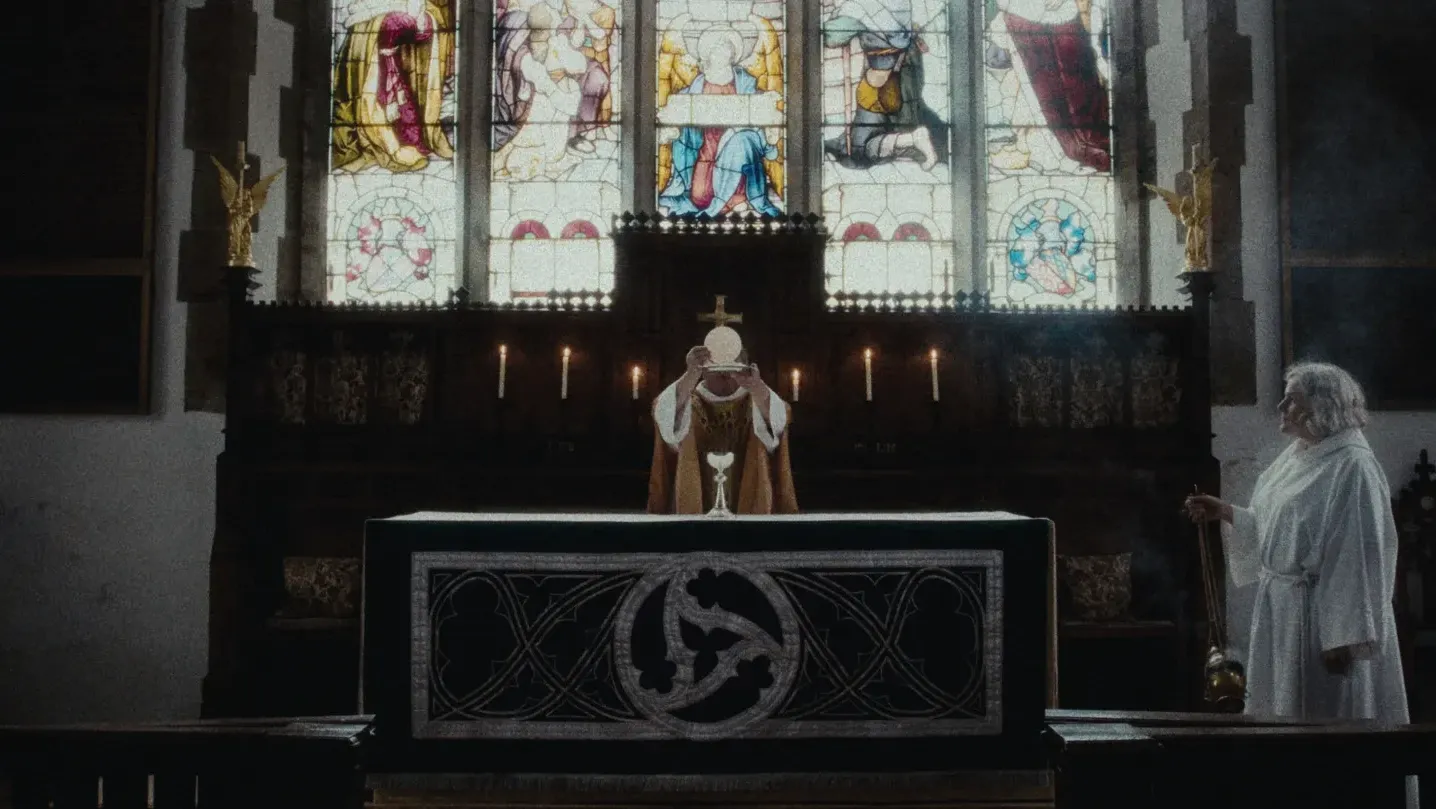 Matter of Britain
Director: Peter Treherne
Year: 2026
MATTER OF BRITAIN was an English country village’s performance of the Holy Grail myth. In that myth, King Arthur’s knights quest for the Holy Grail in order to heal their wasted land. The performance took place over 12 months from 2023 to 2024 in multiple locations across the parish of Mayfield, East Sussex. Over 300 members of the community took part as questing knights, angelic choirs, guiding anchorites and tempting devils. The performance was documented and subsequently made into an ethnographic fantasy that has screened at the Museum of Modern Art, CPH:DOX, Cinéma du Réel and Open City Documentary Film Festival. The work was supported by an Arts Council England Project Grant, the Lund Trust, High Weald AONB, East Sussex Arts Partnership, the University of Reading and the Museum of English Rural Life.