
Moving Sound


Synopsis
Details
- Year
- 2025
- Type of project
- Shorts
- Running time
- 8 min 2 sec
- Format
- Super 16mm
- Director
-
Sadia Pineda Hameed
- Producer
- Sadia Pineda Hameed
- Editor
- Sadia Pineda Hameed
- Sound
- Sadia Pineda Hameed
- Principal cast
- Luisa Pineda Hameed
- 8mm
- Sam Baraitser Smith
- Camera Assistance
- Siôn Marshall-Waters, Kurt Riddle
- Lighting
- Rowan Holownia, Kurt Riddle
- Sound Recording
- Sophie Lindsey
- Colour Grading
- Kurt Riddle
Categories
Production Status
Production Company
Sales Company
Page updates
This page was last updated on 11th September 2026. Please let us know if we need to make any amendments or request edit access by clicking below.
See also
You may also be interested in other relevant projects in the database.
 Anak Where Did We Stay?
Director: Sadia Pineda Hameed
Year: 2026
ANAK WHERE DID WE STAY? is a five-channel film by Sadia Pineda Hameed that brings together The Box’s home movie collection and the artist’s personal/family collection. Rasheed Araeen’s chakras, spouting waves, Beatlesmania, a basking shark, hula dance, an Enoch Powell protest, tidal islands and seafoam floating into the air—the archives converge across time to tell the story of the artist’s mother’s migration from one archipelago to another: the Philippines to the British Isles. The film becomes a gathering site for personal and collective experiences of journeys, resilience and belonging. Road trips unexpectedly reenact the archive, footage finds itself out of context, voices commentate the film as if rewatching a home movie together; mimesis, associations and autonomy are central to the retelling. As camcorders became more accessible from the 1970s onwards, home movies were an unconscious means to rebuild personal archives after colonial displacement, extraction and erasure. ANAK WHERE DID WE STAY?, named after the home movie from The Box’s archive 'Perranporth Where Did We Stay?', unfolds as a conversation between the artist and her mother, exploring the three interconnected journeys of migration, holidays and remembering. Produced as part of The Box’s Reimagining the Film Archive programme (BFI Screen Heritage Fund).
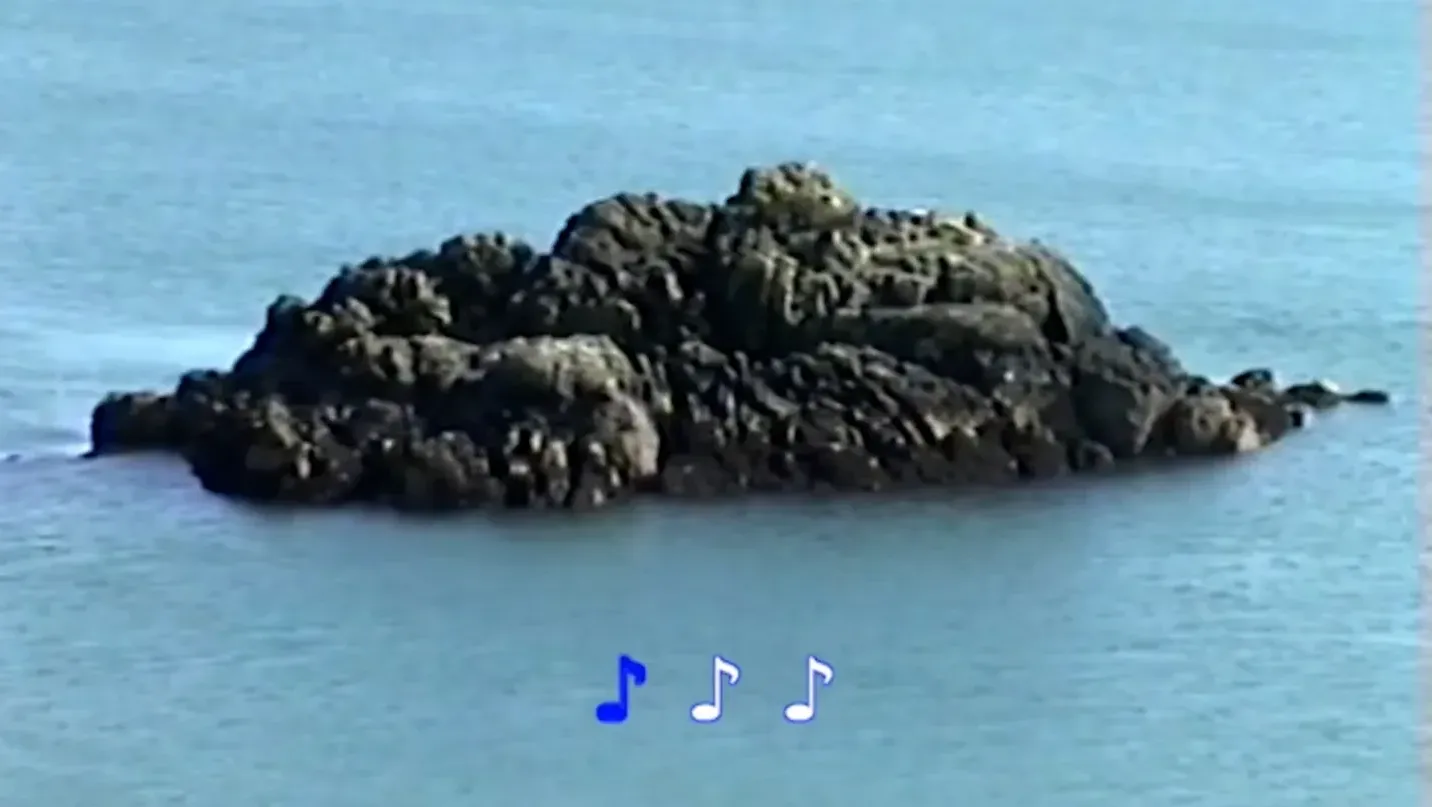 The Song of My Life
Director: Sadia Pineda Hameed
Year: 2020
THE SONG OF MY LIFE takes its audio-visual style from pop karaoke videos, 1970s melodramas and ballads. It is a duet of absences, marked by a missing vocal partner and gaps in the backing track, which comes from a 1971 easy-listening song of the same name by Filipino actress and singer Nora Aunor. Atmospheric and dreamlike, the film weaves together mesmerising images filmed by the artist - light hitting water, waves on the sea, illuminated flowers - with found footage of crushed cars and a TV romance. These visuals shift our attention between what we hear, what we read, what the artist tells us, what her mother cannot directly say, and the silences in between; interested in the gaps in the telling of stories, what she calls the “quiet and misunderstood spaces” where secrets within a family may be sensed or implied. The need to look for meaning in hidden or alternative spaces also arises from living under colonialism, where estrangement between generations is also the consequence of this. Abundant with clues and coded references, THE SONG OF MY LIFE is like experiencing the retelling of a story - each return unearthing more than before.
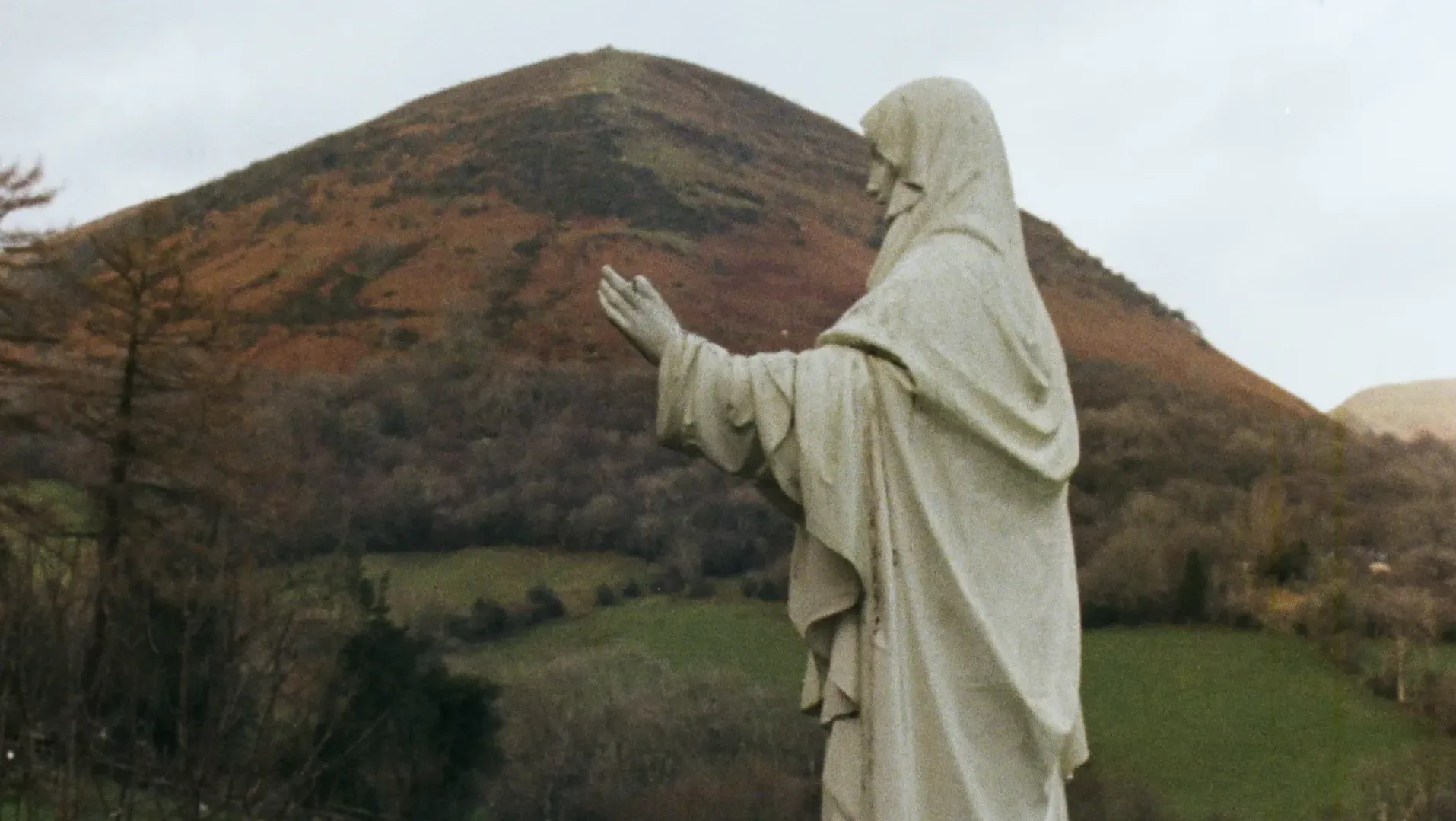 Wales Visitation
Director: Sadia Pineda Hameed
Year: 2026
Retracing Allen Ginsberg’s 1967 ‘trip’ to the Llanthony Valley, Wales Visitation follows an attempt to channel the poet and document his route through enactments, alignments and apparitions. Using clues gleaned from Ginsberg’s poem of the same name, the film unfolds as a semiotic trail where the filmmaker’s encounters echo and accumulate. Handheld footage of tourists, sleeping horses, birdcalls and day/night cycles signpost a route as it begins to form. A diary, a dramatisation and a spiritual road movie, Wales Visitation traces not a fixed path, but the conditions under which something might be called back. Official Selection BFI London Film Festival 2026