
The View from Our House
Synopsis
Details
- Year
- 2013
- Type of project
- Features
- Running time
- 76 mins
- Format
- Video and Super 8 film
- Director
-
Anthea Kennedy, Ian Wiblin
- Producer
- Anthea Kennedy, Ian Wiblin
- Editor
- Anthea Kennedy
- Screenwriter
- Anthea Kennedy, Ian Wiblin
- Director of Photography
- Ian Wiblin
- Sound
- Anthea Kennedy, Ian Wiblin
- Principal cast
- Maren Hobein
- Sound Mix
- Philippe Ciompi
- Colorist
- Sue Giovanni
Genre
Production Status
Production Company
Anthea Kennedy, Ian Wiblin
Sales Company
Anthea Kennedy, Ian Wiblin
Page updates
This page was last updated on 12th May 2025. Please let us know if we need to make any amendments or request edit access by clicking below.
See also
You may also be interested in other relevant projects in the database.
 Alarm Notes
Director: Anthea Kennedy, Ian Wiblin
Year: 2025
A poetic memoir and political report, shot in Berlin and Leipzig, and in landscapes around the British Isles. The film’s narrative builds out from the events of the Reichstag Fire in Berlin in 1933 in which the pioneering German-Jewish sound recordist, Ludwig Koch, on whom the film ultimately centres, plays a minor role, placing him and his family in danger. The film is structured in two parts, juxtaposing Koch’s persecution in Nazi Germany with his experiences as a refugee recording bird song and other sounds in Britain. The film’s images of contemporary urban and rural terrains, and of objects and documents, create a collision between past and present. Shifts in time are further emphasised through the use of Koch’s original sound recordings from Germany and Britain which feature throughout the film. Official Selection FID Marseille 2025 - International Competition
 Four Parts of a Folding Screen
Director: Anthea Kennedy, Ian Wiblin
Year: 2018
Based on documents found in Berlin archives, 'Four Parts of a Folding Screen' explores exclusion, statelessness and the legalised theft and sale of everyday family possessions by the National Socialist regime. A voice, enigmatic and sometimes uncertain, foretells of, relates and recalls the routine processes of injustice and their legacy: the creation of a diaspora of household objects, scattered amongst buildings that no longer exist. As the camera probes the secrets of ordinary spaces, streets and buildings around the city of Berlin, semblances of a person and a history begin to emerge and coalesce. Official Selection Rotterdam International Film Festival 2018 - World premiere
 The Contract of the Century
Director: Christina D. Bartson
Year: 2027
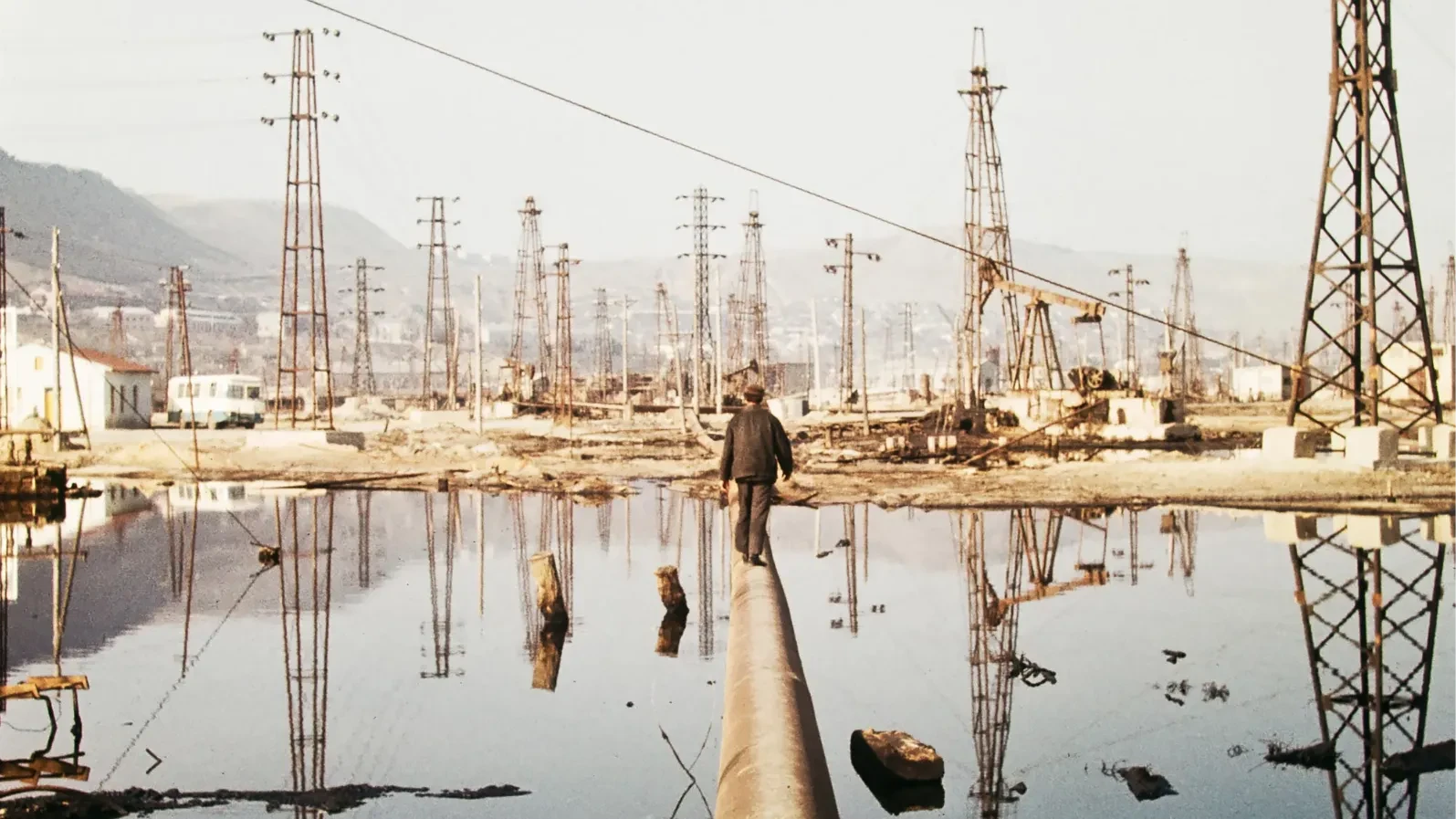
An all-archival film which tells the story of the Baku-Tbilisi-Ceyhan pipeline - one of the most ambitious energy projects of the 21st Century - and the scientists, activists, and farmers that came close to stopping it. Part ghost story, part road trip film, the feature documentary examines how the ghosts of the empire haunt the present, as the world burns.