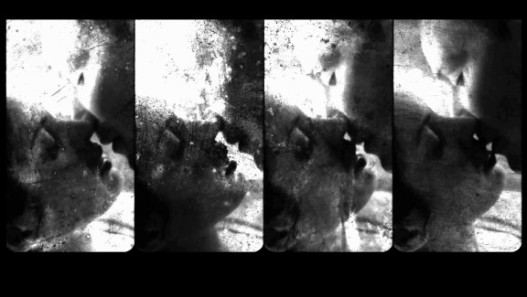
Premier/Divisions is an artist film that blurs the line between documentary and experimental observational studies, in an attempt by the maker, as an outsider, to understand the complexities and tensions surrounding perceived and real notions of division in Kenyan society in the run up to the 2013 presidential elections.
The footage was documented at a time when tensions were particularly at the forefront of Kenya’s collective consciousness due to the occurrences of the 2007/08 election and the so called ‘post-election violence’ wherein tribal, class and political conflicts resulted in the murders of over 1,200 people.
Through a series of interviews with Nairobi residents, including artists, film makers, journalists, and musicians, director Chris Paul Daniels mixes oral anecdotal perspectives on contemporary Kenyan life within the context of tensions highlighted by the election, which was controversially won by President Uhuru Kenyatta on 4 March 2013.
The film aims to present a personalised portrait of Nairobi with all its vibrancy, complexities and contradictions and reflect on universal societal habits to seek communal identities, ideologies and alliances.
In a tick box society where identity has become a commodity, this new dance film by Seeta Patel and Kamala Devam sees them take a humorous look at how they as artists are influenced by the expectations and definitions placed upon them.
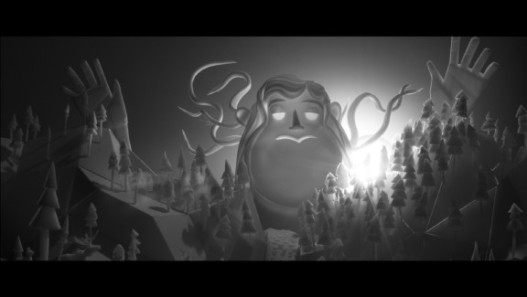
An hilarious cartoon assemblage, starring Joan Of Arc, Emmeline Pankhurst and Boris Johnson.
"Exquisite Corpses" is an animated version of an old Surrealist game and is a group-project by members of London Animation Club. Each contributor makes a four-second animation, making sure that the last frame of their animation becomes the first frame of the next contributor's.
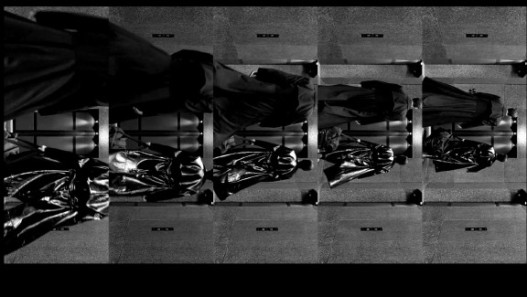
A man in a circular room explores a curious phenomenon, in which 8 synchronised versions of himself temporarily form to create a rotationally symmetric, kaleidoscopic world.
A poetic documentary following Welsh poet Dylan Thomas's journey through Iran in 1951 on an assignment to write a publicity film for the Anglo-Iranian Oil Company. Combining archival photographs with Thomas's own words (spoken by actor Michael Sheen), the film captures the poet's haunting vision of oil, colonialism and exploitation.
February 2013, a group of people came together with one question in mind "What if we forget?" The seaside town of Folkestone was the gateway to the war for over eight million troops.
With the First World War moving out of living memory what does that mean for us?
Commissioned by LUX and Collective Gallery.
'Fib' is the Pictish name for the contemporary Scottish region known as The Kingdom of 'Fife'. It also means a trivial or white lie.
Filmed at locations in Fife, the film focuses on two census takers and considers the resulting information and actions as ‘factish’.
Reflections on the life, death and value of objects inspired by Chris Marker and Alain Resnais' 1953 essay film 'Les Statues Meurent Aussi.' ‘It for others’ includes a performance made in collaboration with Michael Clark Company that seeks to illustrate the basic principle of commodities and their exchange.
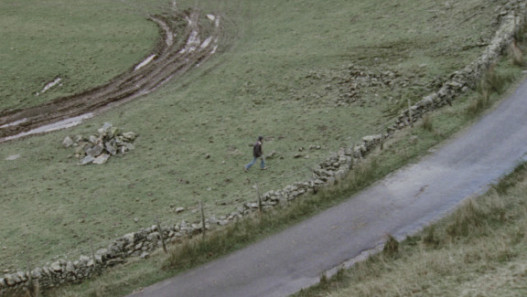
When Madge Elliot complained about the announced closure of her local train station in Hawick, her mother told her to do something about it, and that’s just what she did. It’s Quicker By Hearse The Tale of the Petitioning Housewife, the Protesting Schoolboy and the Campaign Trail Student tells the story of Elliot who, together with her 11-year-old son Kim, Harry Brown the piper and Edinburgh University Railway Society president Bruce McCartney, marched to Downing Street to deliver a petition of 11,768 signatures on 18 December 1968. When final closure was penciled for January 7 1969, Madge and her campaign group continued their protest by posting a coffin on the last train to leave Hawick station and travel to London. The coffin was emblazoned with the words ‘Waverley Line – born 1848 killed 1969’ and was addressed to the then Minister of Transport Richard Marsh.
This work investigates how the national changes recommended in the infamous Beeching report, titled The Reshaping of British Railways, impacted Elliot and her local community. Like Sir Walter Scott’s historical novel Waverley (the railway lines namesake), Elliot’s grassroots campaign raised questions of the need for social progress that does not reject the traditions of the past.