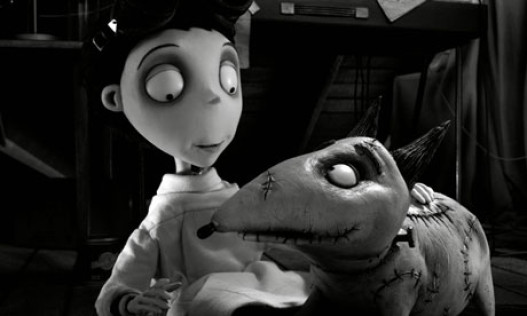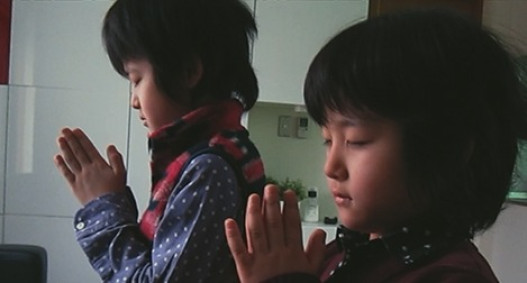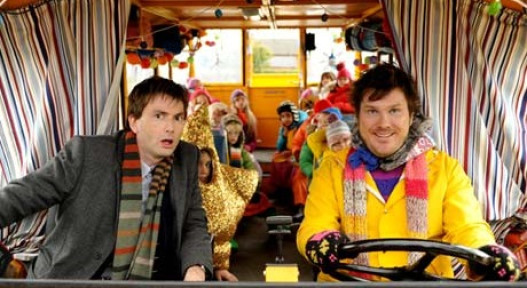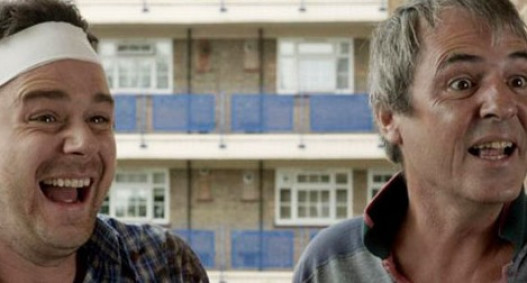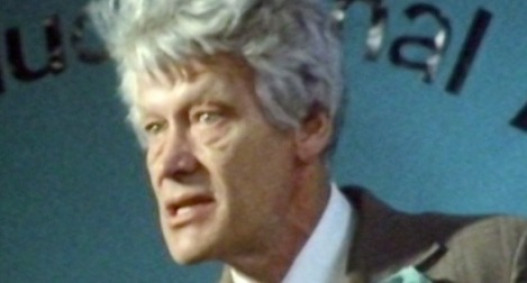
Over the past decade, labia surgery has increased by a staggering 500%. Centrefold is a unique animated documentary that takes an innovative and balanced approach to this controversial topic. Created by award-winning filmmaker Ellie Land and funded by the Wellcome Trust, visit www.thecentrefoldproject to find out more and join the debate.
Set in war torn Europe of the 1940s, ‘Dancing in the Ashes’ follows the story of Edina, a young Jewish ballerina who must battle against segregation, separation and inhumanity, when she is snatched from her home and sent to a Nazi concentration camp.
A greedy multinational company, a poetic vision of the end of the world, an extraordinary drug-induced final dream, great love. Not necessarily in that order.
Inspired by the story of real-life identical twin dancers Michael and Jeremy Hodges, DOUBLE TAKE is a story of sibling rivalry and aging bodies. Part drama, part-documentary, the film plots the twins' journey to reconnect with each other after a lifetime apart.
Danielle is Eris; goddess of Strife in the Greek pantheon. She is a foster child, teen mother, victim of violence at home and from the state. This is a portrait of a life currently being lived. This film examines the nature of Strife in 21st century Britain.
Colin, a man beaten by failures, is forced to face his fears when they appear to him as variations of himself. In a tense, drug-fueled crisis of confidence, will he come through it a stronger man, or will his demons get the better of him?
Grandmother is a Crab borrows from an earlier digital video, made fifteen years ago, that itself used footage captured from a travel advertisement on television. Black and white, and mirror effects, take the image out of time, giving it both vividness and distance. The music is played in reverse. And the voice-over and under-titles are a poem that re-enters the magic world of a child on a beach.
Happy Returns
I bought a scrapbook collection of one woman’s Birthday cards from a house clearance shop a few years ago. She had only kept the cards from her children and grandchildren. It cost me £ 1.99.
The cards chronicle her life through changing design/slogans and written messages. I’ve bought things like this before and they just fill up my shelves.
A poetry film festival kick-started me into making a film using the scrapbook. I looked for a poem to base the cards around but couldn’t find anything suitable, so I tried to write my own.
Johnny, a small time crook and Marie, a dissatisfied shop assistant are both looking for a fresh start. Greta and Pearse meet in extraordinary circumstances on a bridge overlooking the city. With Greta facing a terminal illness and Pearse with a bounty on his head, this unlikely duo fall unexpectedly, helplessly in love before fate and circumstance take over. A wayward corpse and this unlikely love story all compose the jigsaw puzzle as the night's events expertly fall into place, weaving an existential portrait of our characters' lives as their hopes, fears and secrets are revealed.
Macropolis is the story of two reject toys who escape from the factory. Determined to rejoin the other toys, they lose themselves in the big city. Shot in an unusual combination of stop motion, CGi and time-lapse photography, this short film is animated entirely on the streets of Belfast.
Unprecedented access to the twentieth century's most revered war photographer. Don McCullin worked for The Sunday Times from 1969 to 1984, at a time where, under the editorship of Harold Evans, the newspaper was widely recognized as being at the cutting-edge of world journalism, with Don as its star photographer. During that period he covered wars and humanitarian disasters on virtually every continent and the prominence given to his photo essays coincided with one of the most remarkable periods in the history of photojournalism.
With extensive input from Sir Harold Evans, McCullin not only explores Don’s life and work, but also how the ethos of journalism changed during his career. Using the Sunday Times as an example, it compares the strictly ‘hands off’ approach of proprietors like Lord Thompson, who took pride in the fact that he did not want commercial considerations to censor his editors’ from printing what they wanted, to how the newspaper’s independent character changed once it was taken over by Rupert Murdoch, and the pursuit of advertising revenue became paramount, and with it, the inevitable obsessed with fashion, status and celebrity.