
A Machine for Viewing

Synopsis
Official Selection Sundance Film Festival 2020 - New Frontier
Details
- Year
- 2019
- Type of project
- Shorts
- Running time
- c. 25 min
- Format
- Real-time virtual reality (Real-time VR)
- Director
-
Oscar Raby, Richard Misek, Charlie Shackleton
- Producer
- Oscar Raby, Richard Misek
- Executive Producer
- Oscar Raby, Richard Misek
Genre
Categories
Production Status
Production Company
Vrtov
Oscar RabyPage updates
This page was last updated on 12th May 2025. Please let us know if we need to make any amendments or request edit access by clicking below.
See also
You may also be interested in other relevant projects in the database.
 Vanishing
Director: Mandy Williams
Year: 2023
A six-minute experimental film about the climate crisis with a narration arranged in seven sequences. The themes of coastal erosion and rising sea levels emerge and submerge throughout the film, drawing on history as well as possible futures. The video's exploration of coastal erosion and the role of fossil fuels begins from a local south coast perspective, while highlighting the global crisis.
 Minema Cinema
Director: Tim Hope
Year: 2004
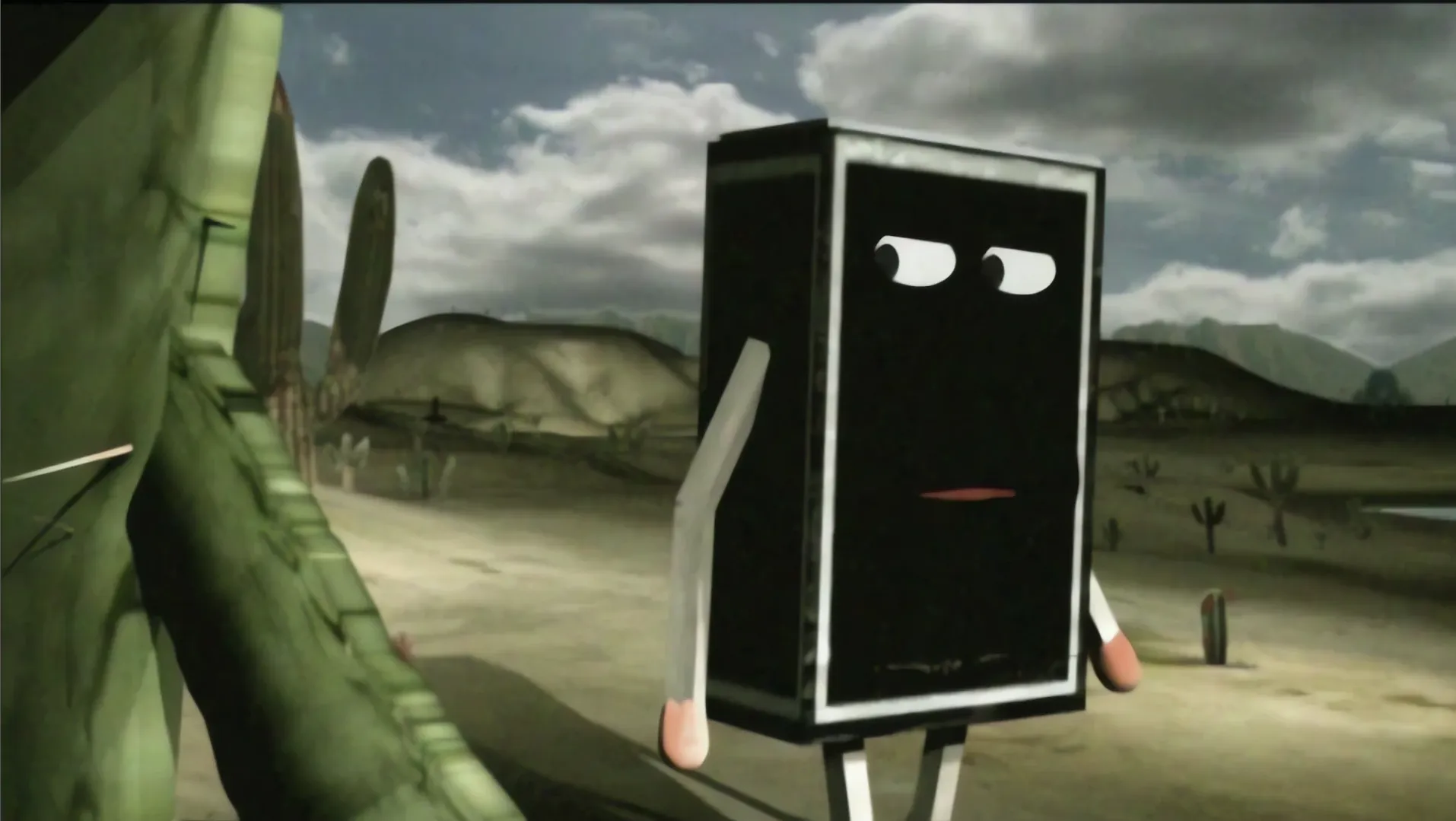
A collection of bizarrely original animated stories from scripts written by young children. Emulating the approach of New York’s 52nd Street Project and London’s Scene & Heard theatre groups, the film is voiced by professional adult actors and directed to render the children’s dramatic intentions as sincerely as possible. Three short films within one film: Revenge Is Cold – Woody the box of matches dreams of becoming a lighter. In the Mexican desert he encounters Antus, an untrustworthy cactus, who claims he can help him fufil his ambitions. Together they journey to ‘The Land of the Freeze’ – the North Pole – where a surprise is in store for both of them. Love Then First Fight – Bob Brakinlot the crowbar is a reformed criminal, determined to give himself a second chance. Into his world bursts Blossom Shritz, a shirt whose life has been torn apart. Desperate for acceptance and affection, they seem to offer each other “a chance to be average in a nasty world“. But can they both put the past behind them? Keep Going – A young egg, Stuart, escapes from his fridge in Scotland on a mission to meet his hero, Michael Jackson.
 Museum of Stolen Souls
Director: Chris Elliott
Year: 1993
Face it, the objects have lives. From missionary madness to museum piece, the ‘history’ of rainforest peoples goes under the lens. Time to give it back…