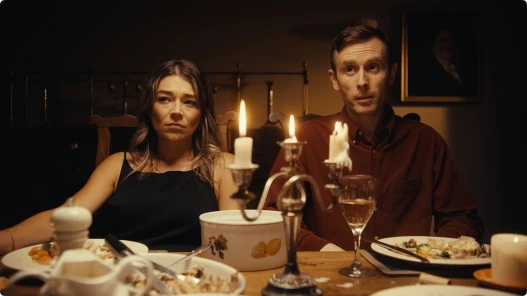
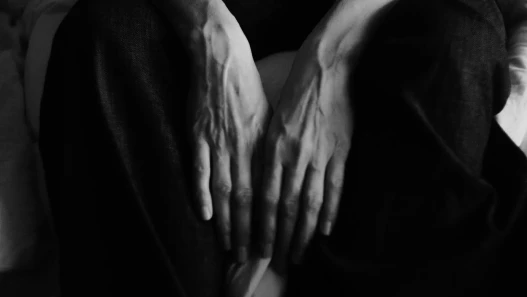
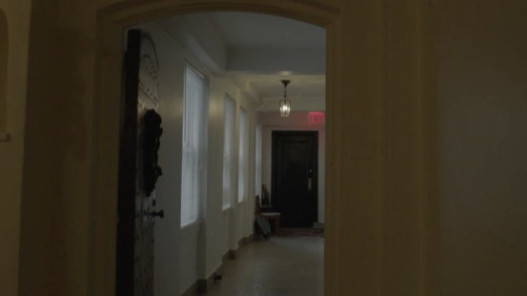
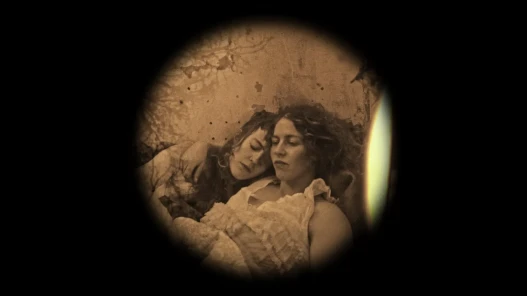
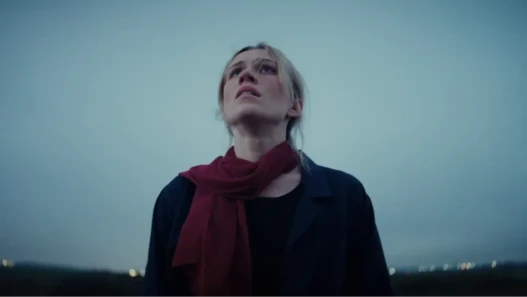
Lily and her husband Charlie, a couple in their early thirties, quietly fall apart inside a rural farmhouse inherited from Charlie’s father. Lily, an agoraphobic artist haunted by a childhood coma that left her temporarily paralysed, secretly performs ritualised asphyxiation to feel control over her body. Charlie, unable to face his hidden sexuality, seeks anonymous encounters with strangers. Their private compulsions hold their marriage together in a fragile, unspoken equilibrium. This balance fractures when Sam and Hannah arrive next door. Sam, a severe, cult-like presence, and Hannah, his unsettlingly youthful companion, first appear as eccentric but intriguing neighbours. Yet their charm soon curdles. They slip into Lily and Charlie’s routines, testing boundaries, dissolving privacy, and infiltrating their emotional space. A psychological game of mimicry deepens into ritualistic horror as Lily and Charlie’s identities begin to erode. Sam and Hannah exploit the psychological fault lines of their victims, using hidden fears and repressed desires as points of entry. As the distinctions between self and other blur, Lily must confront her deepest fear: losing control of her own body. Sam and Hannah are not simply neighbours - they are fallen angels on the run from the wrath of God.
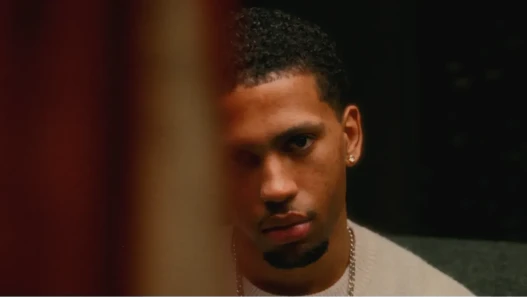
When five teenage boys go viral after a rap performance, a humiliating moment is filmed and shared online, unleashing the unforgiving judgment of the internet.
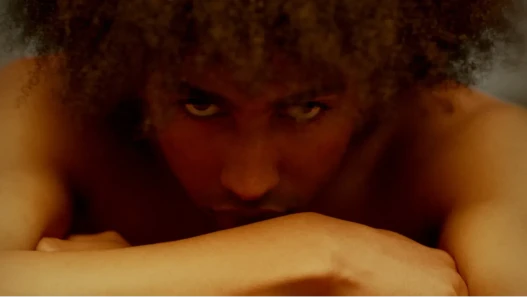
A group of teenage boys become entangled in a series of escalating "games" built around a single rule: don’t flinch.
What begins as playful competition gradually shifts into something more controlled, more psychological, and more dangerous. As the boundaries blur, each boy is forced to navigate power, performance, and the pressure to appear unbreakable.
FAIR explores how identity is shaped under pressure, and what it takes to hold your ground in a world where showing weakness isn’t an option.
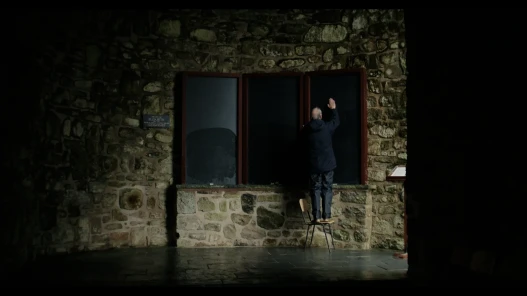
Adlais (Echo) weaves Welsh language folklore and histories through their shared subjects of poetry and drowning – and asks whether we’re listening to the past as it surfaces today.
What if you went on a holiday and the apocalypse happened?
GALICIA! is a found-footage, hybrid-documentary following a couple through home video footage as they visit their friends at a winery in rural Spain and inadvertently capture the end of days.
We live in a time where the sense of our impending mutually assured destruction is more real than it’s ever been. GALICIA! Takes the form of a holiday video - a document of a couple before - and after the great cataclysm. The film starts as something that feels unedited - an accidental video diary of an ordinary couple that feels somewhat ghostly as much as it is also pedestrian. As the film evolves and degrades, we are led to question the fragility of humanity, as well as its power to endure.
A woman attempts to address the self that has shaped her life until now - the “Me” formed through trauma, habit, and survival.
Conceived in relation to the cinema of Ingmar Bergman and Michael Haneke, the film locates meaning in the actor’s presence and in the organisation of cinematic form, rather than in dialogue or narrative guidance.
This encounter is not a dialogue but a struggle: the effort to speak to a governing inner presence in order to loosen its hold. As the film unfolds, the confrontation moves deeper, toward a dark, underground interior where escape seems impossible. In the final movement, a rupture appears - a hole, a glimpse of sky, hands reaching upward from below. Whether she gets out remains uncertain. What matters is that the exit has been found.
A chance visit at a historic murder/ suicide location in Manhattan inexplicably draws a film producer into the crime and inner world of the murderer, American visionary poet and sun mystic Harry Crosby. As her research spirals into obsession, her grip on reality frays, culminating in a harrowing burnout- until she discovers a shocking personal link to the killer.
An original and emotional film dealing with the surreal nature of art and trauma.
London, 1888. Amateur inventor, Tamworth, has just created the first moving image machine.
A modified pinhole camera with wax cylinders attached, he uses it to document a group of women who have fallen into a conspiracy that the violent ‘Jack The Ripper’ is not a man, but a monster.
But his account, though revolutionary, is itself distorted. The newspapers he reads are unregulated, the people he interviews confused by misinformation, and the events he captures cut off and mangled at the edges.
This disturbing journey into his sepia-toned rabbit hole delivers a haunting warning on the perspectives we are fed... as well as what - and who - we can truly believe.
Official Selection Edinburgh International Film Festival 2026 - World premiere
A thought-provoking film about a brilliant young physicist named Alice - based on a famous time-travel thought experiment in Quantum Mechanics.
Alice travels through a wormhole, and is transported into an alternate version of the
recent past where she encounters different versions of herself and her friend and lab
partner, Bob.
Trapped in a world that has diverged from ours during the Cold War, and which prizes collectivism over individuality, Alice is forced to confront her life choices, grappling with profound questions about identity, fate, and the search for meaning.
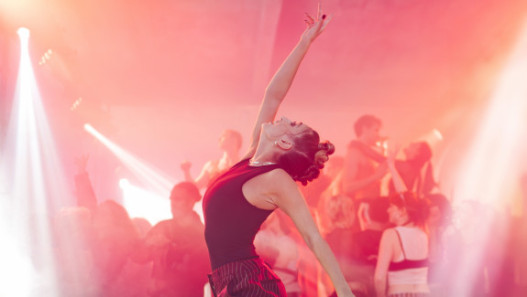
Juliet awakens from a fever dream. How did we get here? The lines between hallucination and memory blur as cinema and dance collide in a kaleidoscopic journey of belonging, defiance, and self-discovery. A vivid retelling of Shakespeare’s Romeo and Juliet brought to life by Scottish Ballet.
Official Selection Edinburgh International Film Festival 2026 - World Premiere
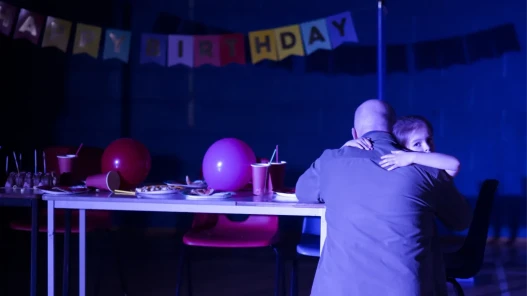
After a middle-aged father falls mysteriously into a coma that transports him to an idealised version of his past, his daughter must do all things necessary to rescue him from an eternal trap.
Delving into themes of solitude, memory, and displacement, the film is crafted through a poetic and non-linear narrative. Set between imagined geographies, it speaks a cinematic language that transcends borders.
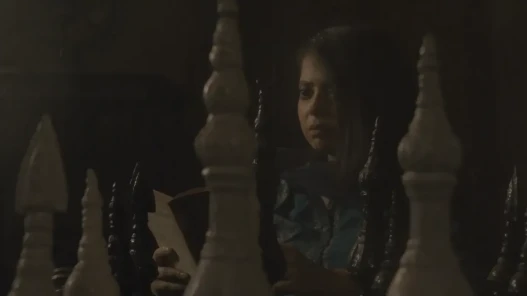
An Adaptation of Norse Mythology, the film speaks of the epic from an Indian POV.