Manufactured Britishness depicts a fictional future where immigrants must undergo physical assessments to demonstrate their worth as prospective British citizens. The narrative is set in post-industrial locations which are turned into training zones where immigrants engage in pre-learned and repetitive tasks in order to pass a bizarre test of citizenship.
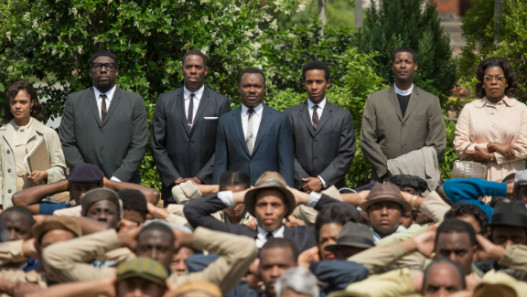
In a small Scottish town in 1974, factory workers refuse to carry out repairs on warplane engines in an act of solidarity against the violent military coup in Chile. Four years pass before the engines mysteriously disappear in the middle of the night.
When Neil Platt is diagnosed with Motor Neurone Disease at the age of 33, he makes the unusual decision to document his final months, not just in a blog (which he painstakingly dictates via frustratingly inaccurate speech recognition software) but by inviting a film crew into the home he shares with his tireless wife Louise and toddler son Oscar. The result is a heartbreaking, funny and tender portrayal of incredible fortitude and love (EIFF).
In a tiny dwelling cut off from the outside world, a young mother tries to cope with the dual responsibility of raising her son and protecting him from their only visitor - the man who keeps them prisoner.
Featuring Toby Jones and an original soundtrack from Mercury Award winning Brit nominees Alt-J, comes a story that defines our times. From a world hidden from view, this is a film about teenagers cast away from their homes who now learn to survive, at any cost, here in the UK.
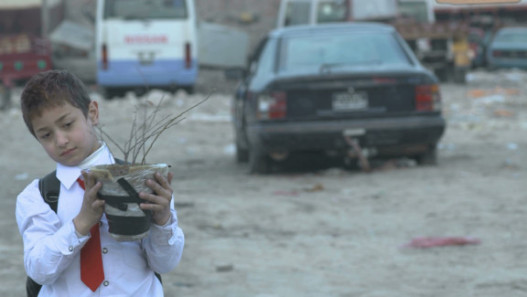
‘Leave to Remain’ is a provocative coming of age story about a young Afghan boy who’s arrival sets off a chain of events that jeopardises the future of those closest to him. Unwittingly he plays an unimaginable game of chance where winning and getting Leave to Remain to stay in the UK is not always what it seems, and all hope hinges on just how good a story he can tell.
Bruce Goodison wrote this film from the real experiences of the thousands of teenagers who land here alone every year, “Imagine what it is like to lose everything that is familiar to you and have to cope as an adult while still a teenager, in an alien society. Their stories can tell us something important about ourselves, and the way we treat others.”
This bold and enlightening film features, alongside established actors, a cast of teenage refugees who have been trained through a Film Academy run by the films creative team.
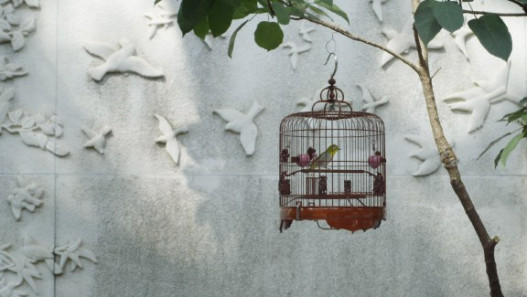
Awkward 11-year-old Nesma is at odds with the world around her since she began caring for her father’s pigeons after his death. Being forced to get rid of the birds by her mother today will see Nesma face an even bigger challenge as she enters womanhood.
Premier/Divisions is an artist film that blurs the line between documentary and experimental observational studies, in an attempt by the maker, as an outsider, to understand the complexities and tensions surrounding perceived and real notions of division in Kenyan society in the run up to the 2013 presidential elections.
The footage was documented at a time when tensions were particularly at the forefront of Kenya’s collective consciousness due to the occurrences of the 2007/08 election and the so called ‘post-election violence’ wherein tribal, class and political conflicts resulted in the murders of over 1,200 people.
Through a series of interviews with Nairobi residents, including artists, film makers, journalists, and musicians, director Chris Paul Daniels mixes oral anecdotal perspectives on contemporary Kenyan life within the context of tensions highlighted by the election, which was controversially won by President Uhuru Kenyatta on 4 March 2013.
The film aims to present a personalised portrait of Nairobi with all its vibrancy, complexities and contradictions and reflect on universal societal habits to seek communal identities, ideologies and alliances.
Sayadeen is a short documentary shot over one morning from a boat off the coast of Gaza. Forced to fish within a three mile sea frontier, local fishermen struggle to survive - supplies are dwindling and they risk everything to feed their families.
A young woman is kidnapped and held captive by two men in a terraced house in a busy London neighbourhood. She is slowly conditioned to accept her captivity by threats of death to her young son, sex trafficking and by the threat of a mysterious all seeing ‘network’ that will seek punishment if she were ever to expose her situation. Complex relationships develop between the captors and the woman resulting in an explosive finish in this dark and disturbing drama.
At the age of 21, Sarah Begum, a British born Bengali girl realised the ambition of a lifetime when she went to live with the Huaorani tribe deep in the Amazon Rainforest and immersed herself in their way of life. This is the film she made of her extraordinary journey.
When Madge Elliot complained about the announced closure of her local train station in Hawick, her mother told her to do something about it, and that’s just what she did. It’s Quicker By Hearse The Tale of the Petitioning Housewife, the Protesting Schoolboy and the Campaign Trail Student tells the story of Elliot who, together with her 11-year-old son Kim, Harry Brown the piper and Edinburgh University Railway Society president Bruce McCartney, marched to Downing Street to deliver a petition of 11,768 signatures on 18 December 1968. When final closure was penciled for January 7 1969, Madge and her campaign group continued their protest by posting a coffin on the last train to leave Hawick station and travel to London. The coffin was emblazoned with the words ‘Waverley Line – born 1848 killed 1969’ and was addressed to the then Minister of Transport Richard Marsh.
This work investigates how the national changes recommended in the infamous Beeching report, titled The Reshaping of British Railways, impacted Elliot and her local community. Like Sir Walter Scott’s historical novel Waverley (the railway lines namesake), Elliot’s grassroots campaign raised questions of the need for social progress that does not reject the traditions of the past.