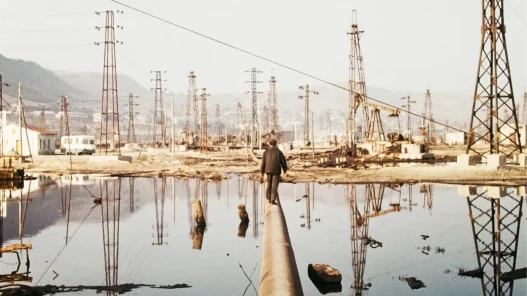
An all-archival film which tells the story of the Baku-Tbilisi-Ceyhan pipeline - one of the most ambitious energy projects of the 21st Century - and the scientists, activists, and farmers that came close to stopping it. Part ghost story, part road trip film, the feature documentary examines how the ghosts of the empire haunt the present, as the world burns.
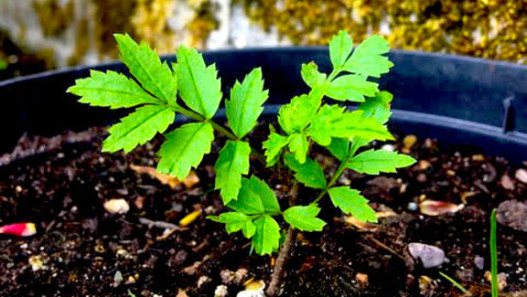
Humans demonstrate and passionately argue that plants have as much by way of brainpower as they do beauty. And what if they were actually communicating with us? And if they were, what do they have to tell us?
Nearing the end of a failed exploratory mining mission in Antarctica, geologist Sammie Bailey drills into an ice cave and discovers a valuable new mineral. The young crew are ecstatic to be going home in two days and with their full bonuses, at the behest of off-base commander Harrison Schultz. Even the cook Leo, who’s not on a share, is pleased to be leaving after months on the isolated base.
When Sammie wakes the day after the party, however, she’s facing more than just a hangover. The latest drill has woken a malevolent Creature, which begins attacking the crew. As they fall one by one, Sammie leads the charge to get the communications back on line. With the rescuers finally on their way, Sammie and Leo realise that science officer Mia has been conspiring with Harrison to use the mineral for military purposes. As a white out descends, Sammie gets the mineral back from Mia and kills the Creature, using the power of the mineral itself. She and Leo destroy the whole base, and fly back to civilisation.
A raw, character driven, feature documentary exploring safety, belonging and human dignity through one extraordinary story.
At the end of the last century, Alen fled the Bosnian War as ethnic nationalism tore apart his home. Finding sanctuary in Britain as an eighteen-year-old refugee, he rebuilt his life in London, starting a family and training as a Health and Safety professional.
Then came the UK’s deadliest residential disaster since WW2. The Grenfell fire, in June 2017, led to seventy-two deaths and exposed a nation-wide housing-safety crisis. Alen, his family and thousands more realised they were living in unsafe homes. Refused help from the government, Alen took a stand, but soon found himself evicted, living on the street and fighting the very system that had once protected him but was now quietly erasing him.
Through Alen’s decade-long journey to get back home, the film bears witness to the human cost of political negligence, corporate greed and systemic failure. Embodied in Alen’s life, reflected by Grenfell and echoed across the geo-political landscape, HOME asks what it means for our world when the very values that define our humanity conflict with the systems and structures we have allegedly built to preserve them.
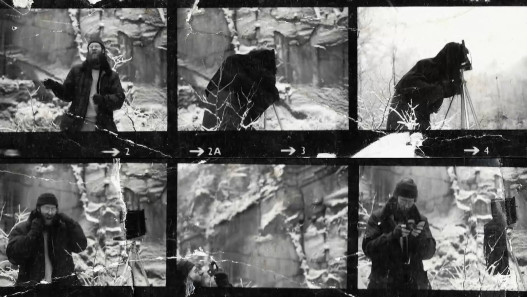
EDGE IS EVERYTHING is a love letter to photography and to the art of truly seeing. For over 30 years, Thomas Joshua Cooper has photographed the furthest edges of land with a 19th century camera. His work bears witness to landscapes transformed by climate change while recovering forgotten histories of migration, exploration and departure.
Cooper draws on his Native American heritage and an extraordinary archive of audio interviews he recorded in the 1970s with photography’s most influential figures, including Ansel Adams, Man Ray, Imogen Cunningham and Paul Strand. These previously unheard tapes create a rare intergenerational conversation about photography and artistic practice.
The film also examines the cost of an uncompromising creative life. His wife and adult daughter reveal the impact of his prolonged absences and challenge the mythology of the solitary artist.
At a time defined by speed, distraction and instant images, Edge is Everything asks what might happen if we slowed down long enough to fully observe. This question has guided Cooper since childhood, when he was taught by his Native American elders: “Each of us has an eye that sees and a seeing eye. When you learn which is which, you will have begun to become human.”
A 50-year-old widow, Emma, has lost everything since her husband, Sam, was killed and her final refuge, a holiday lodge in Cornwall is due to be repossessed too.
She is harried by debt collectors, seeing things, agoraphobic, and convinced she is losing her mind. Desperate, she calls for help from any God listening, and in a dark wood, something hears her.
Her dead husband is haunting her and appears and talks to her in the dead of night.
Emma’s starts to experience dreams of a magical wood and strange figures of butterflies and men made from twigs start to appear in and around the lodge.
Sam is advising that she must let go of the old, in order let a new life in, but this terrifies Emma.
Emma starts to see moments from her future; each bleaker than the last and fears for her own survival.
With eviction imminent, Emma agrees she must surrender, whatever that might mean.
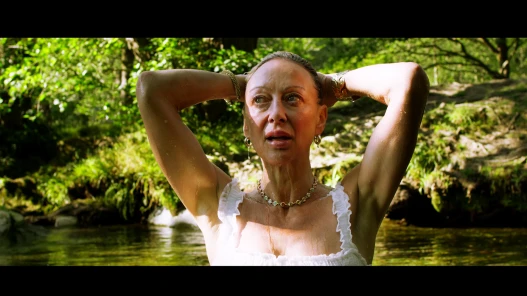
A creature made from forest appears and helps her to escape. She follows it into the magical wood from her dreams and is baptised in a beautiful river. When she emerges, she is reborn and ready for her new life.
Adlais (Echo) weaves Welsh language folklore and histories through their shared subjects of poetry and drowning – and asks whether we’re listening to the past as it surfaces today.
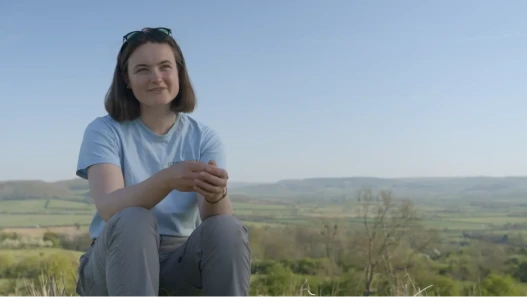
Set in the rolling landscapes of the Cotswolds, a documentary exploring the lives, challenges, and traditions of the farmers who shape this iconic countryside. Through intimate conversations with a new generation and those who have worked the land for decades, the film reveals how farming families are navigating change - from shifting economics and environmental pressures to evolving ideas about land stewardship and community.
Rooted in place and guided by the voices of those who live it every day, the documentary offers a rare, personal portrait of modern rural Britain and the people working to sustain both land and livelihood for the future.
A non-fiction adaptation of the fairy tale book 'The Little Mermaid' (Hans Christian Andersen, 1837).
Fed up with the polluted environment Little Mermaid is forced to live in, she decides to leave home for a better place, embarking on an adventure brimming with new findings.
This is the third and final film of Liliana Colombo's 'Climate Trilogy' which started with ICEMELT PARK (2020) and EARTH THE NEW MARS (2022).
WHAT ABOUT GARY is a raw and emotive documentary that delves into the tragic consequences of misinformation, exploring how conspiracy theories led to the death of Gary Matthews from Covid-19. The film intimately portrays the profound grief of Gary's family and friends as they grapple with this senseless loss.
Director Tristan Copeland, Gary's cousin, questions the purveyors of these falsehoods, driven by a need to understand why they ensnared Gary. Through vérité footage, archival materials, and Gary's own paintings, the film explores Gary’s descent into a distorted reality, seeking the root causes of his susceptibility to misinformation.
Shot during the pandemic in Shrewsbury, England, WHAT ABOUT GARY captures the isolation that made many, including Gary, vulnerable to manipulation. With kinetic editing, evocative camera work, and a poignant score, the film examines how society failed to protect its citizens from misinformation.
A potentially controversial yet vital work that questions how conspiracy theorists wield such influence and whether others can be saved from similar fates. A cautionary tale for a world grappling with truth in the digital age, and a tribute to a life tragically cut short, driven by a need to understand why.
A follow-up documentary from the creator of the ground-breaking, multi-award winning documentary TRASHED.
Ten years on, Blenheim Films explores the devastating effects man-made pollution is still having on the planet and its inhabitants. In a similar style to the original film, the story will once again expose a troubling new problem, finding out what is causing it and what can be done. The stakes have never been higher.